Choosing a forex broker is one of the most important decisions you’ll make as a trader. While spreads, platforms, and trading tools matter, regulation should always come first. That’s where FSCA-regulated brokers enter the conversation.
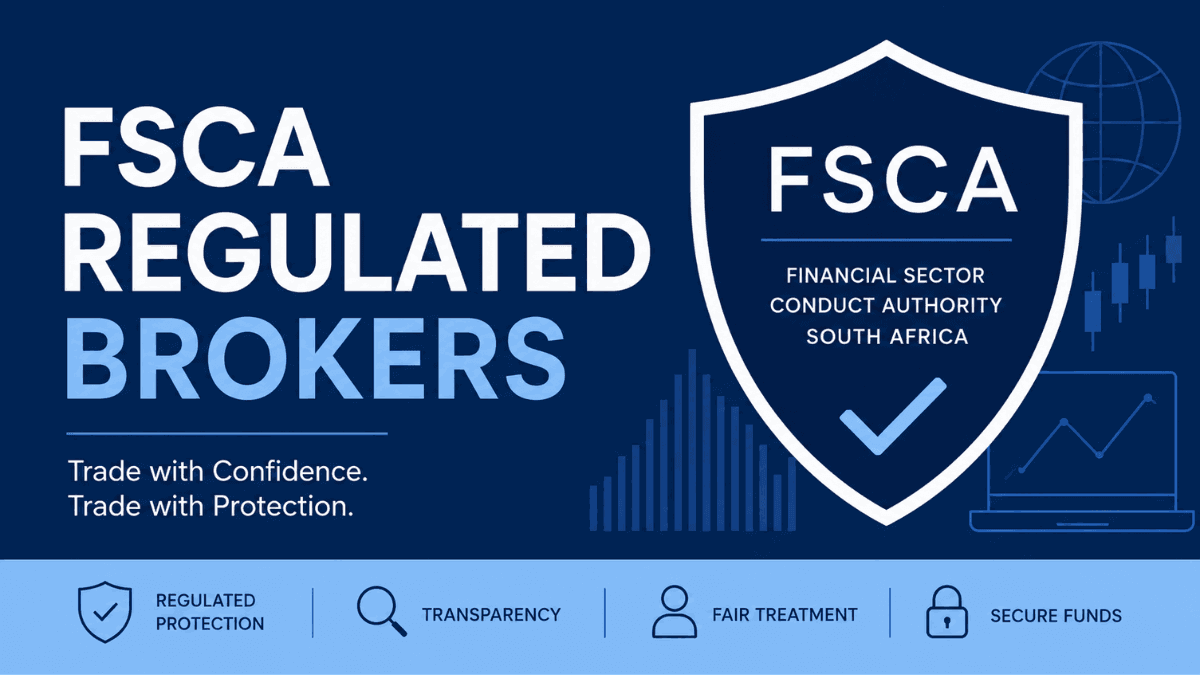
The Financial Sector Conduct Authority (FSCA) is South Africa’s financial regulator responsible for overseeing financial service providers and protecting consumers. Brokers regulated by the FSCA must meet specific standards relating to transparency, business conduct, client treatment, and regulatory compliance. For traders in South Africa and across Africa, FSCA regulation often serves as a key indicator of trust when evaluating a broker.

This guide explains what FSCA regulation means, how it works, its strengths and limitations, and how to identify genuinely regulated brokers.
What Is the FSCA?
The Financial Sector Conduct Authority is South Africa’s market conduct regulator for the financial services sector. Its primary role is to ensure that financial institutions treat customers fairly and operate in accordance with established regulations.
The FSCA replaced the former Financial Services Board (FSB) in 2018 as part of South Africa’s broader financial sector reform framework. The transition was designed to strengthen oversight and improve consumer protection across financial markets.
The regulator supervises a wide range of financial entities, including:
- Forex brokers
- Investment firms
- Asset managers
- Insurance providers
- Financial advisors
- Retirement fund administrators
For forex traders, the FSCA’s role is particularly important because it helps ensure brokers operate transparently and maintain appropriate business standards.
Why FSCA Regulation Matters
Regulation acts as a layer of protection between traders and potentially unethical financial firms. Without regulatory oversight, traders would have little recourse if a broker engaged in misleading practices.
An FSCA-regulated broker is required to comply with rules designed to protect clients and maintain market integrity. While regulation cannot eliminate all risks associated with trading, it significantly reduces the likelihood of dealing with fraudulent or irresponsible firms.
When a broker is licensed by the FSCA, traders can be confident that the company is subject to regulatory scrutiny rather than operating as an unverified offshore entity.
How FSCA Regulation Works
Understanding how the FSCA supervises brokers helps traders appreciate the value of regulation beyond simply seeing a license number on a website.
Licensing Requirements
Before obtaining authorization, a broker must demonstrate that it satisfies various regulatory requirements. These requirements are intended to ensure that only qualified firms can provide financial services.
The regulator assesses factors such as:
- Corporate governance
- Financial stability
- Operational procedures
- Risk management systems
- Management competence
- Regulatory compliance capabilities
Firms that fail to meet these standards may be denied authorization.
Ongoing Monitoring
Receiving a license is not the end of the process. Authorized firms remain subject to ongoing oversight.
The FSCA can request reports, conduct investigations, review compliance procedures, and take enforcement action when necessary. This continuous supervision helps maintain standards across the industry.
Consumer Protection Measures
The regulator places significant emphasis on fair customer treatment. Brokers must provide clear information about risks, fees, and services.
Misleading advertising, deceptive promotions, or unfair treatment of clients can attract regulatory scrutiny and potential penalties.
Key Benefits of Trading With FSCA-Regulated Brokers
For traders, regulation translates into practical advantages that extend beyond simple peace of mind.
Greater Transparency
Regulated brokers are expected to disclose important information about their services, fees, and trading conditions.
This transparency helps traders make informed decisions and compare providers more effectively.
Improved Accountability
When a broker operates under FSCA supervision, it can be held accountable for misconduct.
This accountability creates an environment where firms are encouraged to maintain high operational standards.
Reduced Fraud Risk
No regulator can guarantee that every regulated company will perform perfectly. However, regulation dramatically reduces the likelihood of dealing with outright scams or fraudulent operators.
Many unregulated brokers disappear without warning or refuse withdrawals. Regulated firms face legal and regulatory consequences for such behavior.
Formal Complaint Channels
If disputes arise, traders have access to formal complaint mechanisms and regulatory processes.
Having a recognized authority overseeing the broker provides an additional avenue for resolving issues that cannot be settled directly with the company.
Who Should Consider FSCA-Regulated Brokers?
FSCA regulation is particularly relevant for traders in South Africa, but its influence extends well beyond the country’s borders.
Many traders across Africa prefer brokers regulated by the FSCA because South Africa has one of the continent’s most developed financial regulatory systems.
FSCA-regulated brokers may be suitable for:
- South African retail traders
- African forex traders seeking local oversight
- Beginners prioritizing safety
- Experienced traders seeking regulatory protection
- Investors looking for transparent brokerage services
Even international traders often view FSCA authorization as a positive sign when assessing a broker’s credibility.
FSCA Regulation Compared to Other Major Regulators
Not all regulators operate at the same level, and understanding the differences helps traders evaluate broker safety more effectively.
| Regulator | Country | Reputation | Trader Protection |
|---|---|---|---|
| FCA | United Kingdom | Very High | Strong |
| ASIC | Australia | Very High | Strong |
| CySEC | Cyprus | High | Strong |
| FSCA | South Africa | High | Good |
| DFSA | UAE | High | Strong |
The FSCA is widely respected within Africa and internationally. While regulators such as the FCA and ASIC are often considered among the strictest globally, FSCA regulation still carries substantial credibility.
Many large international brokers maintain FSCA licenses alongside authorizations from other major regulators.
How to Verify an FSCA Regulated Broker
Never assume a broker is regulated simply because it claims to be on its website. Verification is an essential step before opening an account.
Check the License Number
Legitimate brokers typically display their FSCA authorization details in the footer of their website or within legal documentation.
The license number should be clearly visible and easy to locate.
Search the FSCA Register
The FSCA maintains a public database of authorized financial service providers.
When reviewing a broker, compare the company name, registration details, and license information against the regulator’s records.
Confirm Website Ownership
Fraudulent firms sometimes copy license details from legitimate companies.
Ensure the company name on the regulatory register matches the entity operating the broker’s website and trading services.
Review Regulatory Documentation
A genuine regulated broker should provide legal disclosures, terms of business, privacy policies, and risk warnings.
The absence of these documents may indicate a lack of transparency.
Common Misconceptions About FSCA Regulation
Many traders misunderstand what regulation actually guarantees. Understanding these misconceptions can help set realistic expectations.
Regulation Does Not Guarantee Profitability
A regulated broker can provide a safe trading environment, but it cannot guarantee trading success.
Trading remains inherently risky, and losses are always possible regardless of the broker’s regulatory status.
Regulation Does Not Eliminate Market Risk
The forex market can be volatile. Regulation protects against broker misconduct, not against normal market fluctuations.
Even the most heavily regulated broker cannot prevent losses resulting from poor trading decisions.
Regulation Is Not the Only Factor
A broker may be regulated yet still offer poor customer support, limited educational resources, or uncompetitive pricing.
Regulation should be your starting point—not your only evaluation criterion.
Warning Signs to Watch For
Even when researching regulated brokers, it’s important to remain cautious.
Potential red flags include:
- Guaranteed profits
- Unrealistic return claims
- Pressure to deposit immediately
- Lack of clear risk disclosures
- Difficulty verifying regulatory information
- Excessive bonus promotions tied to withdrawal restrictions
Legitimate brokers focus on providing trading services rather than making promises about investment returns.
Additional Factors to Consider Beyond Regulation
While regulation is essential, a complete broker evaluation should include several other considerations.
Trading Costs
Look at spreads, commissions, overnight financing charges, and withdrawal fees.
A regulated broker with extremely high costs may not be the best choice for active traders.
Trading Platforms
Most leading brokers offer platforms such as MetaTrader 4 (MT4), MetaTrader 5 (MT5), cTrader, or proprietary software.
Choose a platform that aligns with your trading style and experience level.
Available Markets
Some brokers specialize in forex, while others offer access to stocks, indices, commodities, cryptocurrencies, and ETFs.
Your preferred asset classes should influence your broker selection.
Customer Support
Responsive support becomes particularly important during account verification, withdrawals, and technical issues.
Testing support before depositing funds can provide valuable insight into service quality.
Popular Features Offered by Many FSCA-Regulated Brokers
Competition among brokers has led to a broad range of features designed to attract traders.
Common offerings include:
- MT4 and MT5 platforms
- Mobile trading apps
- Educational resources
- Market analysis
- Demo accounts
- Multiple account types
- Copy trading services
- VPS hosting options
- Local payment methods
The availability of these features varies by broker, so comparing providers remains important.
Are FSCA-Regulated Brokers Safe?
Safety is often the first concern for new traders. While no financial institution is entirely risk-free, FSCA-regulated brokers generally offer a significantly higher level of protection than unregulated alternatives.
The combination of licensing requirements, ongoing oversight, compliance obligations, and consumer protection measures creates a more secure environment for traders.
That said, safety depends on more than regulation alone. A broker’s reputation, financial strength, operational history, and customer feedback should also play a role in your decision-making process.
How FSCA Regulation Benefits African Traders
For many African traders, FSCA regulation provides something particularly valuable: regional relevance.
Unlike some overseas regulators, the FSCA understands the unique financial landscape of African markets. Many brokers regulated in South Africa support local payment methods, regional customer service, and trading solutions tailored to African clients.
This accessibility often makes FSCA-regulated firms attractive to traders throughout the continent.
Conclusion
FSCA-regulated brokers play an important role in the global forex industry, particularly for traders in South Africa and across Africa. Regulation by the Financial Sector Conduct Authority demonstrates that a broker is subject to recognized regulatory oversight and must adhere to established standards of conduct.
While regulation should never be the sole factor in choosing a broker, it should always be one of the first considerations. A broker’s trading costs, platform quality, customer service, and overall reputation matter, but none of those factors can replace the trust that comes from strong regulatory supervision.
Before opening an account, take the time to verify the broker’s authorization, review its trading conditions, and assess whether its services align with your goals. A few minutes of research today can help you avoid costly mistakes tomorrow.
Frequently Asked Questions
What does FSCA stand for?
FSCA stands for Financial Sector Conduct Authority, the financial services regulator responsible for market conduct supervision in South Africa.
Are FSCA-regulated brokers safe?
FSCA-regulated brokers are generally considered safer than unregulated brokers because they must comply with regulatory standards and are subject to ongoing oversight.
Can international brokers be regulated by the FSCA?
Yes. Many global brokerage firms obtain FSCA licenses to serve South African and African clients while maintaining additional licenses in other jurisdictions.
How do I check if a broker is FSCA-regulated?
You can verify a broker’s regulatory status by checking its license details and confirming them on the official FSCA register.
Is FSCA regulation as strong as FCA regulation?
The FCA is generally regarded as one of the world’s strictest regulators. The FSCA is highly respected, particularly in Africa, but the regulatory frameworks differ in scope and requirements.
Does FSCA regulation guarantee that my money is safe?
No regulator can guarantee absolute safety. Regulation reduces the risk of broker misconduct and improves accountability, but trading and financial risks still exist.
Should beginners choose an FSCA-regulated broker?
Yes. Beginners should prioritize regulated brokers because regulatory oversight provides an additional layer of protection and transparency as they learn to trade.
Trade Anytime, Anywhere with XM
Take your trading to the next level with a globally trusted forex and CFD broker. Enjoy competitive spreads, fast execution, and reliable customer support while trading securely.
With XM, you get access to powerful trading platforms, real-time charts, flexible account types, and advanced tools to help you analyze the markets and manage your trades efficiently. Start your journey today by opening a trading account for free and join millions of traders worldwide.
✅ Open an Account with XM
Vincent Nyagaka has been trading and analyzing markets for over 10+ years. He is a respected trader, author, and coach in financial markets, and is known as the authority on price action trading. At Eazypips, he shares practical strategies and trading lessons to guide aspiring traders toward consistent results.