Choosing among CySEC-regulated brokers is one of the most important decisions a forex or CFD trader can make. Regulation plays a major role in determining whether a broker operates transparently, protects client funds, and follows established financial standards.
While many traders focus on spreads, leverage, or trading platforms, regulation should always come first. A broker may offer attractive trading conditions, but without proper oversight, your funds could be at risk. CySEC-regulated brokers operate under a recognized European regulatory framework that aims to protect investors and maintain market integrity.

This guide explains what CySEC regulation is, how it works, the protections traders receive, the advantages and limitations of CySEC-regulated firms, and how to choose the right broker for your needs.
What Is CySEC?
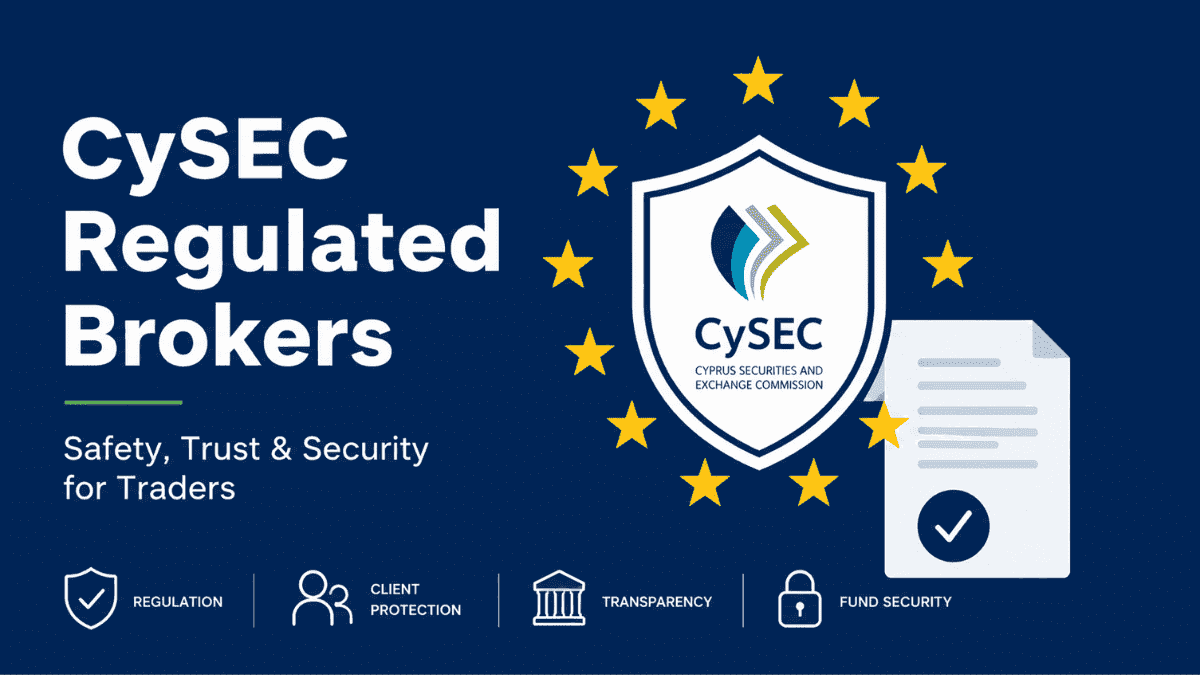
The Cyprus Securities and Exchange Commission (CySEC) is the financial regulatory authority responsible for supervising investment firms in Cyprus.
Established in 2001, CySEC oversees investment companies, brokers, fund managers, and other financial institutions operating within Cyprus. Since Cyprus is a member of the European Union, CySEC-regulated firms must also comply with European financial regulations such as MiFID II (Markets in Financial Instruments Directive II).
This connection to EU regulations has helped Cyprus become one of the largest hubs for online forex and CFD brokers. Many globally recognized brokers choose Cyprus as their European headquarters because CySEC regulation provides access to European markets while maintaining strict compliance standards.
Why CySEC Matters to Forex Traders
Regulation serves as a safeguard between traders and brokers. Without oversight, brokers could potentially manipulate pricing, misuse client funds, or operate without transparency.
CySEC requires licensed firms to follow strict rules regarding:
- Client fund protection
- Financial reporting
- Risk management
- Capital adequacy
- Transparency
- Investor compensation
These requirements help create a safer trading environment for retail and professional traders.
For example, if a broker experiences financial difficulties, regulatory safeguards may help protect client funds and provide avenues for compensation under specific circumstances.
How CySEC Regulation Works
Understanding the regulatory framework helps traders appreciate why CySEC licenses carry value in the industry.
Licensing Requirements
Before receiving authorization, a broker must satisfy numerous regulatory conditions.
These requirements include demonstrating adequate financial resources, implementing compliance procedures, hiring qualified personnel, and establishing risk management systems.
CySEC carefully reviews applications before granting authorization and continues monitoring licensed firms after approval.
Ongoing Supervision
Regulation does not end once a broker receives a license.
CySEC conducts ongoing supervision through audits, reporting requirements, and compliance reviews. Licensed brokers must regularly submit financial statements and demonstrate continued compliance with regulatory standards.
Failure to meet these requirements can result in penalties, restrictions, or license revocation.
European Regulatory Framework
CySEC operates under European Union financial regulations.
This means CySEC-regulated brokers must comply with MiFID II rules, which establish standards for investor protection, transparency, and fair treatment of clients throughout the European Economic Area.
For traders, this creates an additional layer of oversight beyond local CySEC supervision.
Key Protections Offered by CySEC-Regulated Brokers
One reason CySEC-regulated brokers remain popular is the range of investor protections they are required to provide by law.
Segregated Client Funds
Client money must generally be held separately from company operating funds.
This segregation helps ensure that client deposits are not used for broker expenses, salaries, or business operations. If a broker encounters financial challenges, segregated accounts can help reduce risks to client funds.
Negative Balance Protection
Retail traders receive negative balance protection under European regulations.
This means traders cannot lose more money than they have deposited into their trading accounts. Even during periods of extreme market volatility, losses cannot exceed account balances.
This protection became especially important after major market events such as unexpected currency movements and flash crashes.
Investor Compensation Fund
CySEC-regulated brokers participate in the Investor Compensation Fund (ICF).
If an authorized broker is unable to meet its financial obligations, eligible retail clients may be entitled to compensation up to the limits specified by the fund.
The existence of the compensation fund provides an additional safety net, although it should not be viewed as a substitute for choosing a financially strong broker.
Transparency Requirements
Regulated brokers must provide clear information regarding fees, risks, execution policies, and trading conditions.
This helps traders make informed decisions and reduces the likelihood of hidden charges or misleading marketing practices.
Benefits of Trading With CySEC-Regulated Brokers
CySEC regulation offers several practical advantages for traders.
Strong Regulatory Oversight
Licensed brokers operate under clear regulatory standards designed to protect investors.
This oversight encourages transparency and accountability throughout the broker-client relationship.
Access to European Markets
Many CySEC-regulated brokers serve clients across Europe and other regions.
As a result, traders often gain access to sophisticated trading infrastructure, competitive pricing, and multiple asset classes through a single account.
Improved Trust and Credibility
A CySEC license can enhance a broker’s credibility.
While regulation alone does not guarantee quality service, brokers that invest in regulatory compliance typically demonstrate a greater commitment to long-term business operations.
Better Client Protection
The combination of segregated accounts, negative balance protection, and investor compensation creates a stronger safety framework compared to many offshore jurisdictions.
For risk-conscious traders, these protections can provide valuable peace of mind.
Potential Limitations of CySEC Regulation
Although CySEC regulation is widely respected, traders should understand its limitations.
Regulation Is Not a Guarantee Against Losses
Regulatory protection does not eliminate trading risk.
Forex, CFDs, commodities, and other leveraged instruments remain high-risk products. Traders can still lose money due to market movements, regardless of how well-regulated a broker may be.
Not All Brokers Are Equal
Two brokers may hold the same CySEC license while offering vastly different services.
Factors such as execution quality, customer support, platform stability, and pricing can vary significantly.
This is why regulation should be viewed as a starting point rather than the only factor when selecting a broker.
Leverage Restrictions
European regulations impose leverage limits for retail clients.
While these restrictions help reduce risk exposure, some traders prefer the higher leverage available through other jurisdictions. Whether this is a disadvantage depends largely on individual trading strategies and risk tolerance.
How to Verify a CySEC-Regulated Broker
Verifying a broker’s regulatory status is a critical step before opening an account.
Check the License Number
Legitimate CySEC-regulated brokers publicly display their license numbers on their websites.
The number is usually located in the website footer, legal documents, or regulatory disclosures section.
Review Regulatory Information
Examine the broker’s legal documentation carefully.
A genuine broker will clearly disclose its registered company name, license details, address, and regulatory information.
Be cautious if these details are difficult to locate.
Visit the Official CySEC Register
CySEC maintains an online register of authorized investment firms.
Searching the register allows traders to confirm whether a broker holds a valid license and whether any regulatory actions have been taken against the company.
Watch for Clone Firms
Fraudsters occasionally impersonate legitimate regulated brokers.
Always verify website addresses, contact information, and license details directly through official regulatory sources before depositing funds.
Features to Look for in a CySEC-Regulated Broker
Regulation is important, but it should be evaluated alongside other factors.
Trading Costs
Compare spreads, commissions, overnight financing charges, and withdrawal fees.
Lower costs can significantly improve long-term profitability, particularly for active traders.
Trading Platforms
A quality broker should offer reliable trading platforms.
Popular choices include:
- MetaTrader 4 (MT4)
- MetaTrader 5 (MT5)
- cTrader
- Proprietary trading platforms
The best platform depends on your trading style, preferred tools, and experience level.
Available Markets
Different brokers offer different instruments.
Some focus heavily on forex, while others provide access to stocks, indices, commodities, ETFs, cryptocurrencies, and bonds.
A broader product range can help diversify trading opportunities.
Customer Support
Responsive customer service can be invaluable when technical or account-related issues arise.
Look for brokers that provide multiple support channels and timely assistance.
Educational Resources
Many leading brokers invest heavily in trader education.
Webinars, market analysis, tutorials, trading courses, and economic calendars can help traders improve their knowledge and decision-making.
Who Should Use CySEC-Regulated Brokers?
CySEC-regulated brokers are suitable for a wide range of traders.
Beginner Traders
New traders often benefit from the investor protections and regulatory safeguards offered by CySEC.
The combination of negative balance protection and transparent disclosures can help reduce avoidable risks.
Intermediate Traders
Experienced retail traders often appreciate the balance between regulation, competitive pricing, and access to global financial markets.
Many CySEC-regulated brokers provide advanced tools while maintaining strong compliance standards.
Long-Term Investors
Investors seeking exposure to multiple asset classes may find CySEC-regulated firms attractive because many offer diversified products beyond forex trading.
Common Misconceptions About CySEC Regulation
Several myths continue to circulate within trading communities.
“CySEC Is a Weak Regulator”
This perception largely stems from older industry views.
Modern CySEC operates within the broader European regulatory framework and has significantly strengthened its supervisory approach over the years.
“All CySEC Brokers Are the Same”
Regulation establishes minimum standards, not identical service quality.
Execution speed, pricing, support quality, and product offerings can differ considerably from one broker to another.
“Regulated Brokers Are Completely Risk-Free”
No financial institution is entirely risk-free.
Regulation reduces certain operational risks, but trading itself always involves uncertainty and potential losses.
How CySEC Compares to Other Major Regulators
Traders often compare CySEC with other leading regulatory authorities.
| Regulator | Region | Investor Protection | Reputation |
|---|---|---|---|
| CySEC | Cyprus/EU | Strong | High |
| FCA | United Kingdom | Very Strong | Very High |
| ASIC | Australia | Strong | Very High |
| BaFin | Germany | Strong | High |
| FINMA | Switzerland | Strong | Very High |
CySEC remains one of the most recognized regulators in the online trading industry because of its integration with European financial regulations and its extensive oversight of retail brokerage firms.
Conclusion
CySEC-regulated brokers offer an attractive combination of investor protection, regulatory oversight, and access to global financial markets. Their compliance with both CySEC rules and broader European regulations provides traders with safeguards such as segregated client funds, negative balance protection, and participation in the Investor Compensation Fund.
That said, regulation should be only one part of your broker selection process. A wise trader also evaluates trading costs, platform quality, execution standards, available markets, customer support, and overall reputation.
When researching a broker, always verify its license directly, review its trading conditions carefully, and ensure its services align with your goals. Taking the time to perform proper due diligence can help you build a safer and more reliable trading experience.
Frequently Asked Questions
What does CySEC stand for?
CySEC stands for the Cyprus Securities and Exchange Commission, the financial regulatory authority responsible for supervising investment firms and brokers operating in Cyprus.
Are CySEC-regulated brokers safe?
No broker can be considered completely risk-free, but CySEC-regulated brokers must comply with strict investor protection requirements, making them generally safer than unregulated alternatives.
Does CySEC require segregated client funds?
Yes. CySEC-regulated firms are generally required to keep client funds separate from company operating funds, helping protect trader deposits.
What is negative balance protection?
Negative balance protection ensures that retail traders cannot lose more money than they have deposited in their trading accounts.
Can CySEC-regulated brokers offer forex trading?
Yes. Many CySEC-regulated firms provide forex trading alongside CFDs, stocks, commodities, indices, and other financial instruments.
How do I verify a CySEC broker license?
You can verify a broker’s license by checking its license number and confirming the details through the official CySEC register.
Is CySEC better than offshore regulation?
In most cases, CySEC provides significantly stronger investor protections, transparency requirements, and regulatory oversight than many offshore jurisdictions.
Trade Anytime, Anywhere with XM
Take your trading to the next level with a globally trusted forex and CFD broker. Enjoy competitive spreads, fast execution, and reliable customer support while trading securely.
With XM, you get access to powerful trading platforms, real-time charts, flexible account types, and advanced tools to help you analyze the markets and manage your trades efficiently. Start your journey today by opening a trading account for free and join millions of traders worldwide.
✅ Open an Account with XM
Vincent Nyagaka has been trading and analyzing markets for over 10+ years. He is a respected trader, author, and coach in financial markets, and is known as the authority on price action trading. At Eazypips, he shares practical strategies and trading lessons to guide aspiring traders toward consistent results.