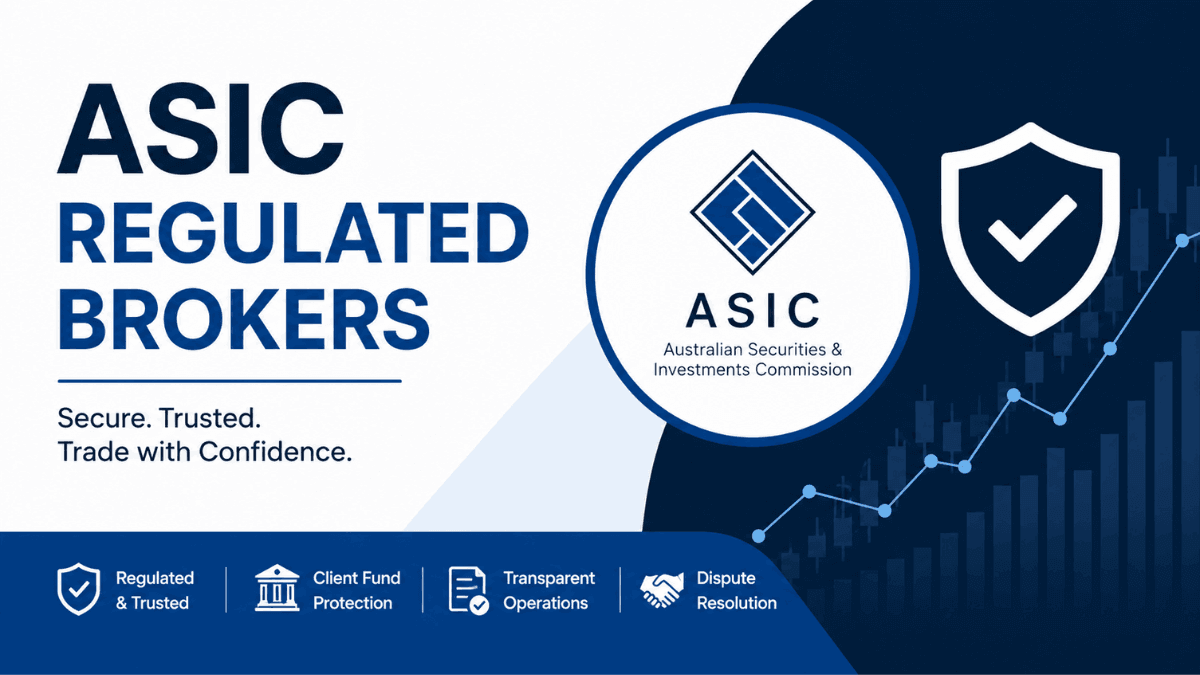
Choosing a forex broker is one of the most important decisions any trader will make. While trading platforms, spreads, and account types matter, regulation should always come first. That is why many traders actively look for ASIC-regulated brokers when opening a trading account.
The Australian Securities and Investments Commission (ASIC) is widely regarded as one of the world’s most respected financial regulators. Brokers licensed by ASIC must meet strict operational, financial, and compliance standards designed to protect traders and maintain market integrity.

This guide explains what ASIC-regulated brokers are, how ASIC oversight works, the benefits and limitations of trading with ASIC-authorized firms, and how to identify legitimate brokers that operate under Australian regulation.
What Is ASIC?
Before choosing an ASIC-regulated broker, it helps to understand the regulator behind the license.
The Australian Securities and Investments Commission (ASIC) is Australia’s corporate, financial markets, and financial services regulator. Its primary role is to ensure financial markets operate fairly, transparently, and efficiently.
ASIC oversees investment firms, stockbrokers, forex brokers, financial advisors, and other financial service providers operating within Australia.
The regulator is known globally for maintaining high compliance standards and enforcing rules designed to protect retail traders from unethical business practices.
What Are ASIC-Regulated Brokers?
ASIC-regulated brokers are financial service providers that have obtained authorization from ASIC to offer trading and investment services.
To legally provide forex and CFD (Contract for Difference) trading services in Australia, a broker generally needs an Australian Financial Services License (AFSL). This license demonstrates that the broker has met ASIC’s regulatory requirements.
An ASIC-regulated broker must comply with rules covering:
- Client fund protection
- Risk management procedures
- Financial reporting
- Staff competence
- Compliance monitoring
- Dispute resolution mechanisms
- Transparency in marketing and communications
These requirements create a safer trading environment than that of unregulated brokers operating without meaningful oversight.
Why ASIC Regulation Matters
Understanding why regulation matters can help you avoid costly mistakes.
A broker holds your trading capital, executes your orders, and manages withdrawals. If the broker operates dishonestly or lacks sufficient financial resources, traders can face significant risks.
ASIC regulation helps reduce these risks by establishing standards that licensed brokers must follow.
Increased Transparency
ASIC requires regulated brokers to provide clear information about their services, fees, risks, and trading conditions.
This transparency allows traders to make informed decisions instead of relying on misleading advertising claims.
Strong Financial Standards
Licensed brokers must maintain sufficient financial resources to support their operations.
This requirement reduces the likelihood of broker insolvency and helps ensure firms can meet their obligations to clients.
Client Money Protection
ASIC-regulated brokers must segregate client funds from company operating funds.
In practice, this means client deposits are typically held in separate trust accounts rather than being mixed with the broker’s own business capital.
Regulatory Oversight
ASIC continuously monitors licensed financial service providers.
When violations occur, ASIC has the authority to investigate, impose penalties, suspend licenses, or take legal action against offending firms.
How ASIC Regulates Forex Brokers
ASIC’s regulatory framework covers multiple areas of broker operations.
Rather than focusing on a single rule, ASIC applies comprehensive oversight across financial, operational, and conduct-related activities.
Australian Financial Services License (AFSL)
The AFSL is the cornerstone of ASIC regulation.
Brokers must obtain and maintain this license before offering regulated financial services within Australia.
Obtaining an AFSL requires firms to demonstrate adequate financial resources, competent management, compliance systems, and risk controls.
Client Fund Segregation
Client money rules are among ASIC’s most important protections.
Licensed brokers must keep client funds separate from company funds. This reduces the risk of client deposits being used for business expenses or operational activities.
Compliance and Reporting
ASIC-regulated brokers must submit regular reports and maintain detailed records.
These reporting requirements allow ASIC to monitor the broker’s financial condition and regulatory compliance.
Risk Disclosure
Forex and CFD trading involve substantial risk.
ASIC requires brokers to provide clear risk warnings and educational materials so traders understand the potential for losses before opening accounts.
Key Benefits of Trading With ASIC-Regulated Brokers
Many traders prefer ASIC-regulated brokers because they combine strong oversight with access to competitive trading conditions.
Higher Level of Trust
Regulation cannot eliminate all risk, but it significantly increases confidence.
Knowing that a broker operates under ASIC supervision provides reassurance that the company must follow established industry standards.
Better Business Practices
Regulated brokers are generally more likely to maintain professional operations.
This includes transparent pricing, proper complaint handling, accurate reporting, and fair treatment of clients.
Access to Dispute Resolution
ASIC-regulated firms must participate in approved external dispute resolution systems.
If a disagreement arises between a trader and broker, there is a formal process available to help resolve the issue.
Reduced Fraud Risk
While scams can appear in any industry, ASIC’s licensing requirements make it much harder for fraudulent operators to obtain and maintain authorization.
This significantly lowers the likelihood of dealing with a completely unregulated scam broker.
Potential Limitations of ASIC-Regulated Brokers
Although ASIC regulation offers substantial protection, traders should understand its limitations.
Regulation should be viewed as one factor among many when evaluating a broker.
Regulation Does Not Guarantee Profits
A regulated broker can provide a safe trading environment, but it cannot make trading profitable.
Market risk remains entirely the trader’s responsibility.
Not All ASIC Brokers Are Equal
Two brokers may both hold ASIC licenses while offering very different trading conditions.
Spreads, execution quality, customer support, available instruments, and platform features can vary significantly.
International Operations
Some brokers operate multiple entities across different jurisdictions.
A broker may advertise ASIC regulation while onboarding international clients under another regulatory entity.
Always verify which legal entity your account will actually be registered under.
How to Verify an ASIC-Regulated Broker
Checking a broker’s regulatory status takes only a few minutes and can prevent serious problems later.
Step 1: Find the License Information
Legitimate brokers typically display their AFSL number on their website.
This information is often located in the website footer, legal documents, or regulatory disclosures.
Step 2: Check ASIC’s Professional Registers
ASIC maintains public registers that allow investors to verify licensing information.
You can search for a broker’s company name or AFSL number to confirm its regulatory status.
Step 3: Confirm Company Details
Ensure the company name on the broker’s website matches the company listed in ASIC’s records.
Fraudulent firms sometimes misuse the license details of legitimate companies.
Step 4: Review Regulatory Warnings
Check whether ASIC or other regulators have issued warnings against the broker.
A history of regulatory issues may indicate potential concerns.
Features to Look for in ASIC-Regulated Brokers
Regulation is only the starting point.
Once you’ve confirmed ASIC authorization, evaluate the broker’s overall offering.
Trading Costs
Compare spreads, commissions, swap rates, and non-trading fees.
Lower costs can significantly improve long-term trading performance.
Trading Platforms
Most ASIC-regulated brokers offer one or more of the following:
- MetaTrader 4 (MT4)
- MetaTrader 5 (MT5)
- cTrader
- Proprietary trading platforms
- Mobile trading applications
Choose a platform that matches your trading style and experience level.
Available Markets
Different brokers offer access to different asset classes.
These may include:
- Forex
- Stocks
- Indices
- Commodities
- ETFs
- Bonds
- Cryptocurrencies
The best broker for you depends on the markets you intend to trade.
Customer Support
Reliable support becomes especially important when account or withdrawal issues arise.
Look for brokers that offer responsive customer service through multiple communication channels.
Popular ASIC Regulated Brokers
Several internationally recognized brokers operate under ASIC regulation.
Examples often include firms such as:
- IC Markets
- Pepperstone
- FP Markets
- Eightcap
- CMC Markets
- ThinkMarkets
The presence of ASIC regulation does not automatically make one broker better than another. Traders should compare fees, execution quality, platform offerings, and account features before making a decision.
ASIC vs Other Major Regulators
Different regulators provide different levels of oversight and protection.
Here is a general comparison:
| Regulator | Country | Reputation |
|---|---|---|
| Australian Securities and Investments Commission | Australia | Very High |
| Financial Conduct Authority | United Kingdom | Very High |
| Cyprus Securities and Exchange Commission | Cyprus | High |
| Monetary Authority of Singapore | Singapore | Very High |
| Financial Sector Conduct Authority | South Africa | High |
ASIC consistently ranks among the most respected financial regulators globally due to its enforcement record and comprehensive regulatory framework.
Who Should Choose an ASIC-Regulated Broker?
ASIC-regulated brokers are suitable for a wide range of traders.
Beginners often appreciate the additional security that comes from strong regulatory oversight. Knowing a broker operates under strict rules can provide peace of mind while learning the markets.
Experienced traders also benefit from ASIC regulation because many licensed brokers offer advanced platforms, institutional-grade liquidity, competitive pricing, and professional trading tools.
For anyone prioritizing safety, transparency, and credibility, ASIC regulation is often considered a strong positive factor when selecting a broker.
Common Mistakes Traders Make When Choosing Brokers
Many broker-related problems stem from avoidable mistakes.
One common error is focusing solely on bonuses or promotions while ignoring regulations. Attractive offers mean little if the broker cannot be trusted.
Another mistake is assuming all regulated brokers are identical. Regulation establishes minimum standards, but execution quality, costs, and service levels can differ significantly.
Some traders also fail to verify the exact entity holding their account. Always confirm which regulatory jurisdiction applies to your account before depositing funds.
Are ASIC-regulated brokers safe?
Safety is one of the primary reasons traders seek ASIC-regulated brokers.
No broker can eliminate market risk or guarantee profits. Trading always involves the possibility of losing money.
What ASIC regulation does provide is a structured framework that promotes transparency, accountability, and proper handling of client funds. Compared with unregulated brokers, ASIC-regulated firms generally offer a significantly higher level of trust and investor protection.
Final Thoughts
ASIC-regulated brokers are among the most trusted choices in the online trading industry. ASIC’s licensing requirements, client fund rules, compliance standards, and ongoing oversight help create a safer environment for forex and CFD traders.
Still, regulation should never be the only factor influencing your decision. The best approach is to verify ASIC authorization first and then compare trading costs, platforms, customer support, available markets, and overall reputation.
A broker that combines strong ASIC regulation with competitive trading conditions can provide a solid foundation for your trading journey.
Frequently Asked Questions
What does ASIC stand for?
ASIC stands for the Australian Securities and Investments Commission, Australia’s financial services and markets regulator.
Are ASIC-regulated brokers safe?
ASIC-regulated brokers are generally considered safer than unregulated brokers because they must comply with strict licensing, compliance, and client fund protection requirements.
How can I check if a broker is ASIC-regulated?
You can verify a broker’s license by searching ASIC’s public professional registers using the broker’s company name or AFSL number.
Do ASIC-regulated brokers protect client funds?
ASIC requires licensed brokers to segregate client funds from company operating funds, helping improve the protection of customer deposits.
Can international traders use ASIC-regulated brokers?
Many ASIC-regulated brokers accept international clients, although account availability may depend on local regulations and the broker’s operating structure.
Is ASIC better than other regulators?
ASIC is widely regarded as one of the world’s top financial regulators. It is often compared favorably with regulators such as the FCA in the United Kingdom and MAS in Singapore.
Do all ASIC-regulated brokers offer the same trading conditions?
No. Regulation establishes minimum standards, but spreads, commissions, platforms, execution quality, and customer service vary between brokers.
Trade Anytime, Anywhere with XM
Take your trading to the next level with a globally trusted forex and CFD broker. Enjoy competitive spreads, fast execution, and reliable customer support while trading securely.
With XM, you get access to powerful trading platforms, real-time charts, flexible account types, and advanced tools to help you analyze the markets and manage your trades efficiently. Start your journey today by opening a trading account for free and join millions of traders worldwide.
✅ Open an Account with XM
Vincent Nyagaka has been trading and analyzing markets for over 10+ years. He is a respected trader, author, and coach in financial markets, and is known as the authority on price action trading. At Eazypips, he shares practical strategies and trading lessons to guide aspiring traders toward consistent results.