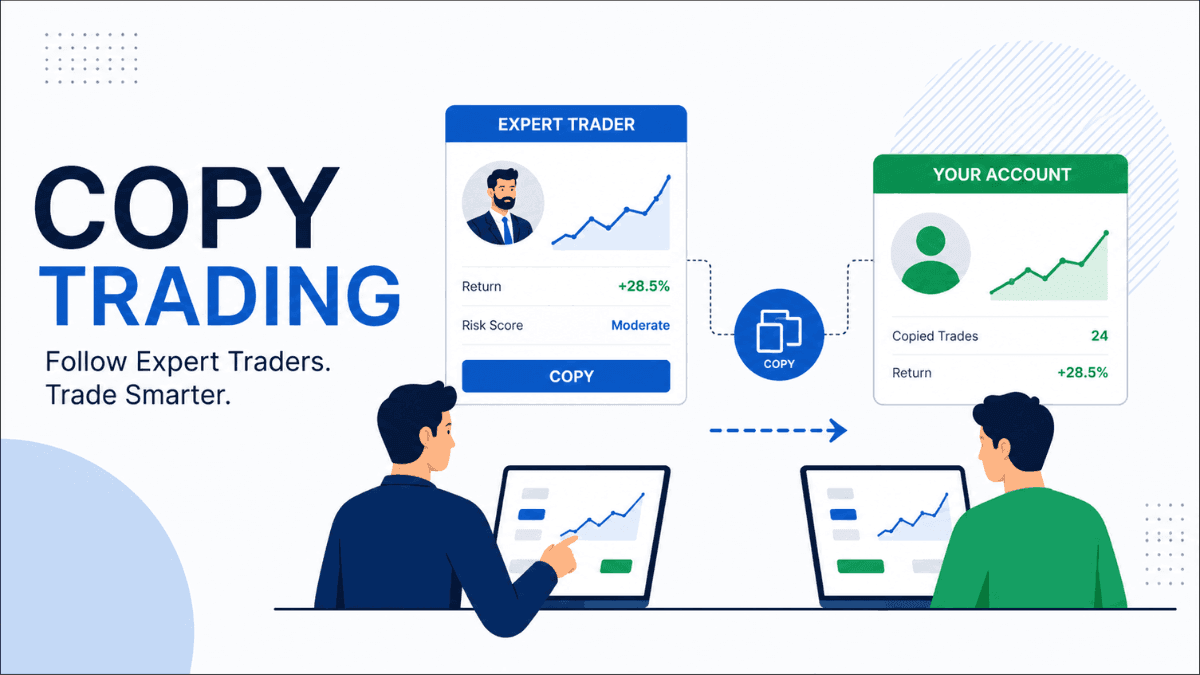
Copy Trading has become one of the most popular ways for beginners to participate in the financial markets without having to analyze charts or develop complex trading strategies from scratch. Instead of making every trading decision yourself, copy trading allows you to automatically replicate the trades of experienced traders in your own account.
While the concept sounds simple, successful copy trading involves much more than selecting the trader with the highest returns. Understanding risk, diversification, platform features, fees, and realistic expectations can make the difference between long-term success and costly mistakes.

This comprehensive guide explains everything you need to know about copy trading, including how it works, its advantages and disadvantages, common risks, and practical tips for choosing traders wisely.
What Is Copy Trading?
Copy trading is an investment method that allows one trader (the follower) to automatically copy another trader’s positions in real time. Whenever the selected trader opens, modifies, or closes a position, the same action is executed proportionally in the follower’s account.
Think of it as hiring an experienced driver while still owning your own car. You remain in control of your account, but someone else’s trading decisions determine which trades are executed.
Unlike handing money to an investment manager, your funds usually remain in your own brokerage account. The copy relationship simply authorizes the platform to mirror another trader’s trading activity.
How Copy Trading Works
Understanding the process helps you know exactly what happens behind the scenes.
Step 1: Open a Trading Account
You first register with a broker or copy trading platform that supports copy trading.
After verifying your identity, you fund your account.
Step 2: Browse Professional Traders
Most platforms provide public performance statistics, including:
- Total return
- Monthly performance
- Risk score
- Number of followers
- Average holding time
- Maximum drawdown
- Preferred markets
- Years of trading history
These statistics help investors compare different traders.
Step 3: Allocate Capital
Instead of giving your entire account to one trader, you choose how much money to allocate.
For example:
- Total account balance: $5,000
- Allocate $2,000 to Trader A
- Allocate $1,500 to Trader B
- Keep the remaining funds available
This reduces concentration risk.
Step 4: Trades Are Copied Automatically
Suppose your chosen trader buys EUR/USD using 2% of their capital.
Your account automatically places the same trade using approximately 2% of the capital you allocated.
Everything happens automatically without manual intervention.
How Position Sizing Works
Most platforms copy trades proportionally.
For example:
Trader’s account: $20,000
Your allocation: $2,000
The trader buys one lot.
Your account opens approximately 0.10 lots because your allocation is one-tenth the size.
This proportional system helps maintain similar risk exposure.
Markets Available for Copy Trading
Most copy trading platforms support multiple financial markets.
Common markets include:
- Forex
- Stocks
- Cryptocurrencies
- Commodities
- Indices
- ETFs
- CFDs (Contracts for Difference)
The available markets depend on the broker.
Benefits of Copy Trading
Copy trading offers several advantages, especially for newer investors.
Beginner-Friendly
Many people want exposure to financial markets but lack technical knowledge.
Copy trading removes much of the learning curve by allowing experienced traders to make trading decisions.
Saves Time
Technical analysis, news research, and chart monitoring require significant time.
Copy trading allows busy professionals to participate without spending hours studying the markets.
Learning Opportunity
Watching skilled traders can help beginners understand:
- Risk management
- Trade timing
- Position sizing
- Market behavior
- Trading psychology
Many investors eventually become independent traders after learning from copied strategies.
Diversification
Instead of relying on one strategy, investors can follow multiple traders with different trading styles.
For example:
- One forex trader
- One stock trader
- One cryptocurrency trader
Diversification reduces dependence on a single approach.
Emotional Discipline
Many beginners lose money because emotions influence their decisions.
Automatic copying removes much of the emotional decision-making that often leads to poor trading choices.
Risks of Copy Trading
Copy trading is not guaranteed to generate profits.
Understanding the risks is essential before investing.
Traders Can Lose Money
Even highly successful traders experience losing periods.
Past performance never guarantees future results.
High Drawdowns
Some traders generate impressive returns by taking excessive risks.
Eventually, large losses may erase months of profits.
Always examine maximum drawdown before copying anyone.
Overconfidence
Many beginners assume profitable traders cannot lose.
Markets constantly change.
Strategies that worked well last year may struggle under different market conditions.
Platform Risk
Technical failures, execution delays, or broker issues can occasionally affect copied trades.
Choose reputable, regulated brokers whenever possible.
Lack of Understanding
Blindly copying trades without understanding basic investing principles can lead to poor decisions during periods of loss.
Copy Trading vs Social Trading vs Mirror Trading
These terms are often confused.
Copy Trading
Trades are copied automatically.
You choose a trader, and every position is replicated.
Social Trading
Investors interact through a community.
Members share ideas, charts, and market analysis, but copying trades may be optional.
Mirror Trading
Entire trading strategies or algorithms are copied automatically rather than individual discretionary traders.
How to Choose the Right Trader
This is where most investors make mistakes.
Instead of chasing the highest returns, evaluate traders using multiple factors.
Consistency
Steady monthly growth is often more sustainable than sudden large gains.
Risk Score
Many platforms assign a numerical risk rating.
Moderate-risk traders generally suit long-term investors better than extremely aggressive traders.
Maximum Drawdown
Drawdown measures the largest decline from a previous account peak.
Lower drawdowns generally indicate better risk management.
Trading History
Look for traders with at least one or two years of verified results.
A few profitable months provide limited evidence of long-term skill.
Number of Trades
A larger sample of trades gives a more reliable picture of performance than just a handful of lucky positions.
How Much Money Should You Invest?
There is no universal amount.
Only invest money you can afford to lose.
Many brokers allow copy trading with relatively small deposits, making it accessible to beginners.
As your confidence grows, you can gradually increase your investment.
Should You Copy Multiple Traders?
For many investors, diversification is a sensible approach.
Instead of placing all your capital with one trader, consider spreading it across traders with different strategies.
Examples include:
- Short-term forex trader
- Long-term stock investor
- Cryptocurrency swing trader
Diversification reduces the impact of one trader performing poorly.
Common Fees in Copy Trading
Copy trading is rarely free.
Possible charges include:
- Spread costs
- Trading commissions
- Overnight swap fees
- Performance fees
- Management fees
- Withdrawal fees
- Currency conversion fees
Always review the broker’s fee schedule before investing.
Risk Management Tips
Good risk management matters just as much as selecting the right trader.
Consider these best practices:
- Never invest your entire portfolio in one trader.
- Diversify across different trading styles.
- Set maximum loss limits where available.
- Review performance regularly.
- Avoid chasing traders after unusually large gains.
- Keep realistic expectations.
Protecting capital should always come before maximizing returns.
Common Mistakes Beginners Make
Many copy traders lose money because they repeat the same avoidable mistakes.
The most common include:
- Selecting traders solely because of high returns
- Ignoring drawdown statistics
- Investing too much with one trader
- Frequently switching traders
- Expecting guaranteed profits
- Stopping after one losing week
- Ignoring platform fees
Successful copy trading requires patience and discipline.
Is Copy Trading Safe?
Copy trading can be relatively safe when used responsibly, but it is never risk-free.
Safety depends on several factors, including:
- Broker regulation
- Platform security
- Trader selection
- Risk management
- Capital allocation
Using regulated brokers and diversifying investments significantly improves your overall risk profile.
Who Should Consider Copy Trading?
Copy trading may suit:
- Beginners learning financial markets
- Busy professionals with limited research time
- Investors seeking diversification
- People interested in passive investing approaches
- Traders looking to learn from experienced professionals
It may not suit individuals expecting guaranteed profits or those unwilling to tolerate temporary losses.
Tips for Long-Term Success
Long-term copy traders often share similar habits.
They focus on preserving capital rather than chasing extraordinary returns.
Successful investors typically:
- Research traders carefully.
- Diversify their investments.
- Stay patient during normal losing periods.
- Review portfolios periodically.
- Continue learning about financial markets.
Treat copy trading as a long-term investment strategy rather than a shortcut to instant wealth.
Frequently Asked Questions
Is copy trading legal?
Yes. Copy trading is legal in many countries when offered by regulated brokers that comply with local financial regulations.
Can beginners make money from copy trading?
Yes, but profits are never guaranteed. Beginners who choose experienced traders and practice proper risk management generally have better long-term outcomes.
Can I stop copying a trader at any time?
Most platforms allow you to stop copying whenever you choose. You can usually decide whether to close existing positions immediately or manage them manually.
How much money do I need to start copy trading?
The minimum investment depends on the broker. Some platforms allow beginners to start with relatively small deposits, while others require higher minimum allocations.
Is copy trading better than trading yourself?
It depends on your knowledge, available time, and goals. Copy trading can shorten the learning curve, but developing your own trading skills provides greater independence over time.
Final Thoughts
Copy trading has made financial markets more accessible than ever, allowing beginners to benefit from the experience of seasoned traders while maintaining ownership of their funds. It offers convenience, educational value, and the potential to diversify investment strategies without requiring years of market experience.
That said, copy trading is not a shortcut to guaranteed profits. Success depends on choosing traders carefully, understanding the risks involved, managing your capital wisely, and maintaining realistic expectations. By treating copy trading as a disciplined investment approach rather than a get-rich-quick solution, you place yourself in a much stronger position to achieve sustainable, long-term results.
Trade Anytime, Anywhere with XM
Take your trading to the next level with a globally trusted forex and CFD broker. Enjoy competitive spreads, fast execution, and reliable customer support while trading securely.
With XM, you get access to powerful trading platforms, real-time charts, flexible account types, and advanced tools to help you analyze the markets and manage your trades efficiently. Start your journey today by opening a trading account for free and join millions of traders worldwide.
✅ Open an Account with XM
Vincent Nyagaka has been trading and analyzing markets for over 10+ years. He is a respected trader, author, and coach in financial markets, and is known as the authority on price action trading. At Eazypips, he shares practical strategies and trading lessons to guide aspiring traders toward consistent results.