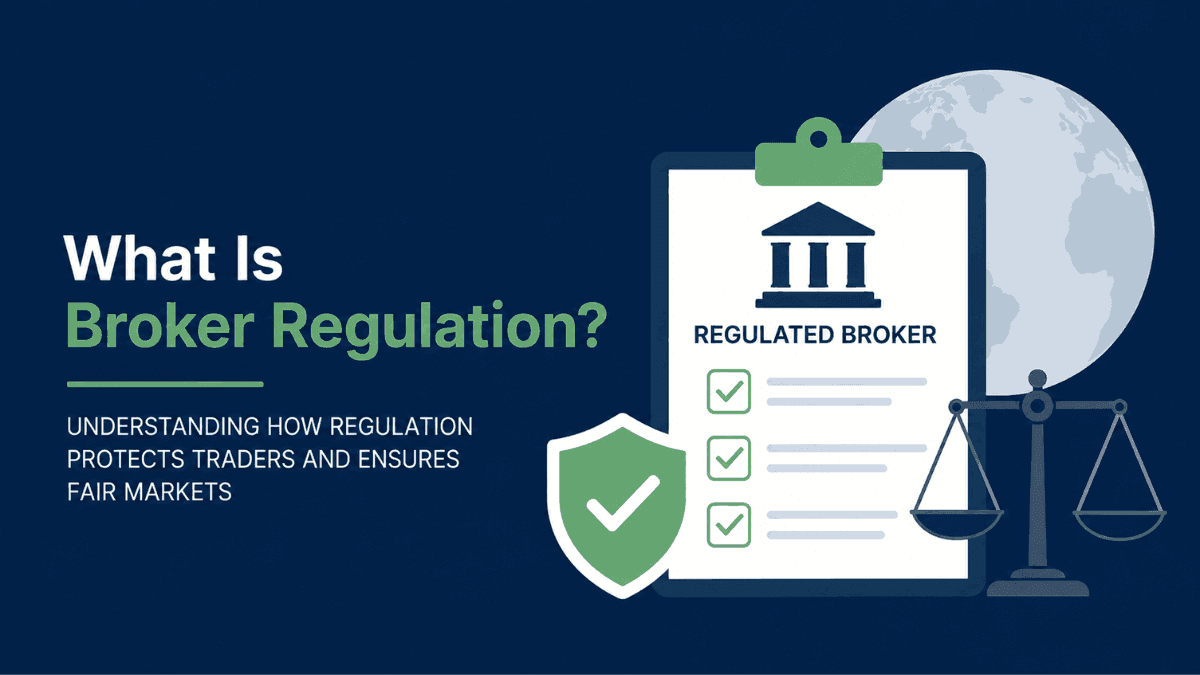
If you have ever compared forex brokers, you’ve probably seen phrases like “regulated by FCA,” “licensed by ASIC,” or “regulated broker.” Understanding what broker regulation is is one of the most important steps in choosing a safe trading platform.
Broker regulation refers to the oversight and supervision of financial brokers by government agencies or independent financial authorities. These regulators create rules that brokers must follow to protect clients, maintain market integrity, and reduce the risk of fraud. While regulation cannot eliminate all risks associated with trading, it provides an important layer of protection that traders would otherwise lack.
Click Here To Join our Telegram Community
Whether you’re trading forex, stocks, commodities, indices, or cryptocurrencies, knowing how broker regulation works can help you avoid scams and make more informed decisions.
What Is Broker Regulation and Why Does It Matter?
Broker regulation exists to create trust between financial institutions and their clients. Without regulation, anyone could launch a brokerage business, collect customer deposits, and operate without accountability.
Financial regulators establish standards that brokers must meet before they can offer services to the public. These standards typically cover areas such as capital requirements, client fund protection, risk disclosures, reporting obligations, and business conduct.
For traders, regulation matters because it helps ensure:
- Client funds are handled properly
- Brokers operate transparently
- Complaints can be investigated
- Fraudulent practices are reduced
- Financial standards are maintained
Think of regulation as a safety framework. It doesn’t guarantee profits or eliminate trading losses, but it helps ensure the broker itself follows established rules.
How Broker Regulation Works
To understand broker regulation, it helps to look at what happens behind the scenes when a broker seeks authorization.
A broker must typically apply for a license from a regulatory authority. The regulator reviews the company’s financial health, management structure, operational procedures, and compliance systems before granting approval.
Once licensed, the broker is subject to ongoing supervision. Regulators may require periodic audits, financial reporting, compliance reviews, and customer protection measures.
If a broker violates regulations, authorities can impose penalties ranging from fines and restrictions to license suspension or revocation.
This ongoing oversight is what separates regulated brokers from unregulated firms.
The Main Goals of Broker Regulation
Every financial regulator has its own rules, but most share similar objectives.
Protecting Retail Investors
One of the primary purposes of regulation is to protect individual traders from unfair practices.
Many retail traders lack the resources or expertise to evaluate every aspect of a brokerage business. Regulation helps bridge that gap by establishing minimum standards that brokers must follow.
Promoting Fair Markets
Financial markets function best when participants trust the system.
Regulators work to prevent market manipulation, misleading advertising, insider misconduct, and other activities that could undermine confidence in the market.
Maintaining Financial Stability
Regulators also monitor the financial health of brokerage firms.
By requiring brokers to maintain adequate capital reserves, regulators reduce the risk of firms collapsing due to financial difficulties.
Enforcing Transparency
Regulated brokers are generally required to provide clear information about trading costs, risks, terms of service, and account conditions.
This transparency allows traders to make more informed decisions.
Types of Financial Regulators
Not all regulators have the same reputation, authority, or requirements. Some are known for strict oversight, while others have more flexible regulatory frameworks.
Tier-1 Regulators
Tier-1 regulators are generally considered the most respected and stringent.
Examples include:
- Financial Conduct Authority (FCA) – United Kingdom
- Australian Securities and Investments Commission (ASIC) – Australia
- Commodity Futures Trading Commission (CFTC) – United States
- Monetary Authority of Singapore (MAS) – Singapore
- Investment Industry Regulatory Organization of Canada (IIROC)
Brokers regulated by these authorities often face rigorous compliance requirements.
Tier-2 Regulators
Tier-2 regulators typically provide a reasonable level of oversight but may have slightly less stringent requirements.
Examples include regulators in Cyprus, New Zealand, South Africa, and the United Arab Emirates.
Offshore Regulators
Some brokers operate under offshore licenses issued by smaller jurisdictions.
While offshore regulation is not inherently bad, traders should carefully evaluate the protections it offers. Regulatory standards, compensation schemes, and enforcement capabilities may vary significantly.
What Requirements Must Regulated Brokers Meet?
The exact requirements vary by jurisdiction, but regulated brokers generally must meet several important obligations.
Capital Adequacy Requirements
Regulators often require brokers to maintain a minimum amount of operating capital.
This requirement helps ensure that the broker can continue to operate during periods of financial stress and meet its obligations to clients.
Client Fund Segregation
One of the most important protections involves segregated accounts.
Client funds are typically kept separate from the broker’s operational funds. This separation reduces the risk of customer deposits being used for business expenses.
Regular Audits and Reporting
Regulated brokers must often submit financial reports and undergo audits.
These reviews help regulators monitor the broker’s financial condition and compliance status.
Risk Disclosure Requirements
Brokers are usually required to inform clients about the risks involved in trading leveraged products.
This includes explaining the possibility of significant losses and providing appropriate risk warnings.
Anti-Money Laundering Compliance
Financial institutions must verify customer identities and monitor suspicious activities.
This process is commonly referred to as Know Your Customer (KYC) and Anti-Money Laundering (AML) compliance.
How Regulation Protects Forex Traders
For forex traders specifically, regulation provides several practical benefits.
Many regulators require brokers to maintain fair execution practices. This means brokers must process client orders in accordance with established standards and avoid deceptive practices.
Some jurisdictions also require negative balance protection. This feature prevents traders from losing more money than they have deposited into their accounts.
In certain countries, compensation schemes may also exist. If a regulated broker becomes insolvent, eligible clients may receive partial reimbursement up to specified limits.
These protections can make a significant difference during unexpected market events.
Regulated vs Unregulated Brokers
Choosing between a regulated and unregulated broker should not be a difficult decision.
A regulated broker operates under established legal requirements and oversight. An unregulated broker may operate without meaningful supervision, making it harder for clients to seek recourse if problems arise.
Advantages of Regulated Brokers
Regulated brokers generally offer:
- Greater transparency
- Stronger client protections
- Better dispute resolution processes
- Higher operational standards
- Increased trust and credibility
Risks of Unregulated Brokers
Unregulated brokers may expose traders to risks such as:
- Fund mismanagement
- Withdrawal issues
- Price manipulation
- Limited legal recourse
- Lack of accountability
While not every unregulated broker is fraudulent, the risks are significantly higher.
How to Verify a Broker’s Regulation
Many traders assume a broker is regulated simply because it claims to be.
That assumption can be dangerous. Always verify regulatory status independently.
Check the Regulator’s Website
Most financial authorities maintain searchable public registers.
You can usually search using the broker’s company name, license number, or registration details.
Match Company Names
Pay close attention to legal entity names.
A broker may operate multiple subsidiaries under different regulatory licenses. Make sure the entity serving your region is the one that is actually regulated.
Review License Details
Check whether the license is active and whether the broker is authorized to offer the services you intend to use.
Expired or restricted licenses should raise concerns.
Watch for Clone Firms
Scammers sometimes copy the names and license numbers of legitimate companies.
Always verify website addresses, contact details, and regulatory records carefully.
Common Misconceptions About Broker Regulation
Many traders misunderstand what regulation does and does not provide.
Regulation Does Not Guarantee Profits
A regulated broker cannot prevent you from making poor trading decisions.
Regulation protects against broker misconduct, not trading losses.
Regulation Does Not Eliminate Risk
Financial markets involve risk regardless of how well a broker is regulated.
Even the best-regulated broker cannot guarantee successful trades.
More Licenses Are Not Always Better
Some brokers advertise numerous regulatory licenses.
What matters most is the quality of the regulator and the protections available to clients under that specific jurisdiction.
What Happens If a Broker Breaks the Rules?
When regulators identify violations, they can take enforcement action.
Depending on the severity of the misconduct, consequences may include fines, restrictions on business activities, customer compensation requirements, license suspension, or permanent revocation.
Public enforcement actions also serve as warnings to investors and encourage higher standards across the industry.
For this reason, reputable brokers invest heavily in compliance systems and regulatory oversight.
How Regulation Affects Broker Services
Regulation can influence several aspects of a broker’s offering.
Certain regulators impose leverage limits to reduce risk for retail traders. Others may require stronger risk disclosures or restrict specific financial products.
As a result, traders in different countries may receive different account features from the same broker.
While some traders prefer fewer restrictions, these measures are generally designed to improve investor protection.
Choosing a Regulated Broker
Selecting a broker should involve more than checking spreads and trading platforms.
Before opening an account, consider:
- The regulator overseeing the broker
- Client fund protection policies
- Years in operation
- Company reputation
- Transparency of fees
- Customer support quality
- Available trading instruments
A broker’s regulatory status should be one of the first factors you evaluate, not the last.
Final Thoughts
Understanding what broker regulation is essential for anyone entering the financial markets. Regulation creates a framework that promotes transparency, accountability, and investor protection while helping maintain confidence in the trading industry.
Although regulation cannot eliminate trading risk or guarantee success, it can significantly reduce the likelihood of dealing with dishonest or poorly managed brokers. Before depositing funds with any brokerage firm, take the time to verify its regulatory status, understand the protections available, and confirm that the broker is regulated by a reputable financial authority.
In trading, protecting your capital starts long before you place your first trade. It begins with choosing a broker you can trust.
Frequently Asked Questions
What is broker regulation in simple terms?
Broker regulation is the supervision of financial brokers by government agencies or financial authorities. It ensures brokers follow rules designed to protect clients and maintain fair markets.
Why is broker regulation important?
Regulation helps protect client funds, promotes transparency, reduces fraud, and provides a framework for resolving disputes between traders and brokers.
Can a regulated broker still fail?
Yes. Regulation reduces risk but does not eliminate it. Some jurisdictions provide compensation schemes that may offer partial protection if a broker becomes insolvent.
How do I know if a broker is regulated?
Check the broker’s license details on the regulator’s official website. Never rely solely on claims made by the broker itself.
Is an offshore-regulated broker safe?
Some offshore-regulated brokers operate legitimately, but protections can vary significantly. Always research the regulator and the specific safeguards available to clients.
Which regulators are considered the most trusted?
Authorities such as the FCA, ASIC, MAS, and CFTC are widely regarded as among the most respected financial regulators in the world.
Does regulation affect trading conditions?
Yes. Regulations can influence leverage limits, client protections, risk disclosures, and the types of products brokers are allowed to offer.
Trade Anytime, Anywhere with XM
Take your trading to the next level with a globally trusted forex and CFD broker. Enjoy competitive spreads, fast execution, and reliable customer support while trading securely.
With XM, you get access to powerful trading platforms, real-time charts, flexible account types, and advanced tools to help you analyze the markets and manage your trades efficiently. Start your journey today by opening a trading account for free and join millions of traders worldwide.
✅ Open an Account with XM
Vincent Nyagaka has been trading and analyzing markets for over 10+ years. He is a respected trader, author, and coach in financial markets, and is known as the authority on price action trading. At Eazypips, he shares practical strategies and trading lessons to guide aspiring traders toward consistent results.