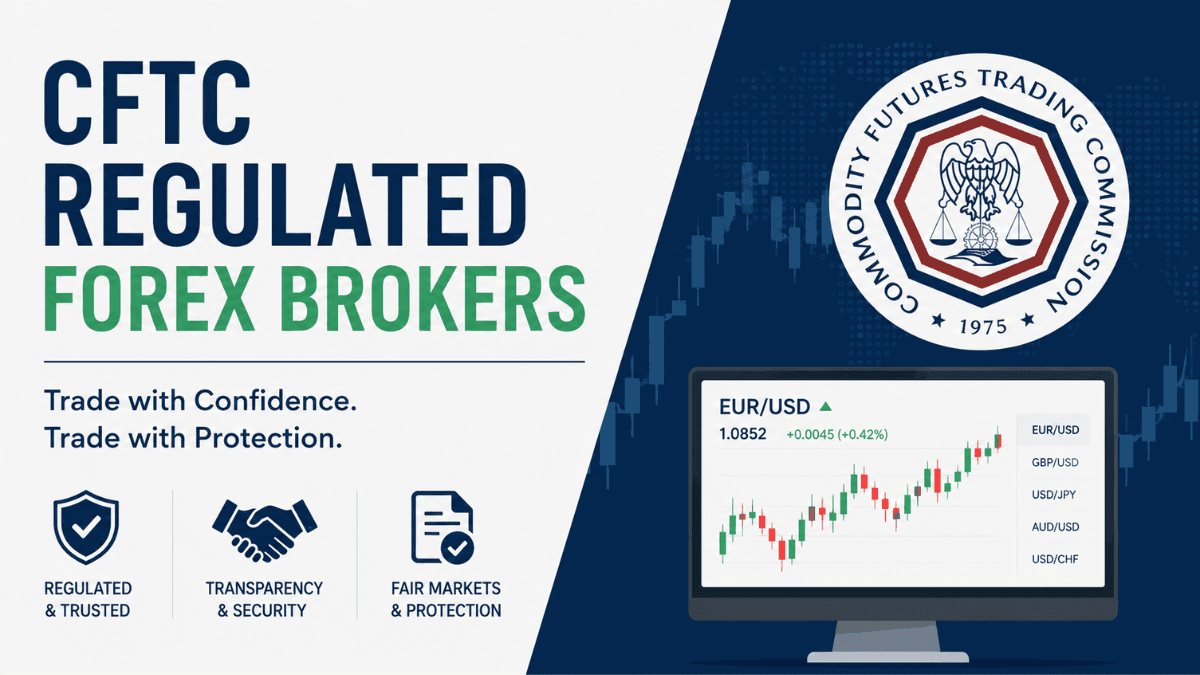
Choosing a forex broker is one of the most important decisions any trader will make. Among the many regulatory bodies worldwide, brokers regulated by the Commodity Futures Trading Commission (CFTC) are often considered among the most heavily supervised in the industry. If you are looking for maximum regulatory oversight, strong client protections, and transparent trading conditions, CFTC-regulated forex brokers deserve serious consideration.
The United States maintains some of the strictest financial regulations in the world. As a result, only a small number of forex brokers can legally offer retail forex trading to U.S. residents. While this limits broker choice, it also creates a trading environment designed to protect investors from fraud, manipulation, and unethical business practices.

This guide explains what CFTC regulation means, how it works, the benefits and limitations of trading with a CFTC-regulated broker, and what traders should look for when selecting a broker.
What Is the CFTC?
The Commodity Futures Trading Commission (CFTC) is the primary U.S. government agency responsible for regulating futures, options, and other derivatives, as well as retail forex markets.
Established in 1974, the CFTC’s mission is to maintain fair, transparent, competitive, and financially sound markets while protecting participants from fraud, abuse, and systemic risk.
When it comes to forex trading, the CFTC oversees firms that offer retail foreign exchange services to U.S. clients. These brokers must meet strict operational, financial, and compliance requirements.
The agency works closely with the National Futures Association (NFA), which acts as the industry’s self-regulatory organization.
How CFTC Regulation Works
Understanding how regulation functions helps explain why CFTC-regulated brokers are highly regarded.
The CFTC creates and enforces regulatory rules. The NFA monitors member firms, conducts audits, investigates complaints, and ensures compliance with those rules.
A broker serving U.S. forex traders typically must:
- Register with the CFTC
- Become an NFA member
- Maintain significant capital reserves
- Submit regular financial reports
- Follow strict marketing and disclosure requirements
- Implement anti-money laundering procedures
- Protect client interests through robust compliance programs
These requirements create a higher barrier to entry than many offshore jurisdictions.
Why CFTC Regulation Matters
Strong regulation is not just a legal requirement. It directly affects the safety of your trading account.
When a broker operates under CFTC supervision, it must meet standards designed to reduce the likelihood of misconduct or insolvency. This can provide traders with greater confidence that the company is operating transparently.
Key benefits include:
- Increased financial transparency
- Ongoing regulatory oversight
- Regular audits and reporting
- Strong compliance requirements
- Clear dispute resolution procedures
- Strict penalties for violations
For many traders, regulation becomes even more important than spreads or promotional offers.
CFTC Regulated Forex Brokers and Trader Protection
One of the biggest advantages of trading with a CFTC-regulated broker is the emphasis on investor protection.
The U.S. regulatory framework was strengthened significantly after the global financial crisis. Regulators introduced additional safeguards to reduce risk and improve market integrity.
Capital Requirements
Forex brokers operating in the United States must maintain substantial capital reserves.
These requirements help ensure brokers remain financially stable during periods of market volatility. Adequate capitalization also reduces the risk of a broker failing due to sudden market movements.
Financial Reporting
Regulated firms must submit frequent reports regarding their financial condition.
These reports allow regulators to monitor broker stability and identify potential problems before they become serious threats to clients.
Compliance Monitoring
Compliance departments play a critical role in regulated broker operations.
Their responsibility is to ensure the broker follows applicable rules, maintains proper records, and treats customers fairly.
Anti-Fraud Measures
The CFTC actively investigates and prosecutes fraud involving retail forex trading.
This enforcement activity helps maintain confidence in U.S. financial markets and discourages unethical behavior.
Best Known CFTC-Regulated Forex Brokers
Because U.S. regulations are stringent, relatively few brokers qualify to offer retail forex trading to American residents.
Some of the most recognized names include:
| Broker | Founded | Known For |
|---|---|---|
| FOREX.com | 2001 | Broad forex offering and research tools |
| OANDA | 1996 | Strong pricing transparency |
| IG US | 2019 (US launch) | Advanced trading platforms |
| Interactive Brokers | 1978 | Multi-asset trading access |
| Charles Schwab | 1971 | Integrated investment services |
Availability may vary depending on your location and account eligibility requirements.
Always verify a broker’s current regulatory status before opening an account.
How to Verify a CFTC-Regulated Broker
Never rely solely on marketing claims.
A legitimate broker should clearly display its registration details and NFA membership information.
Check the NFA Background Affiliation Status Information Center
The NFA maintains a public database that allows traders to verify registration status.
You can search for a broker by company name, NFA ID, or registration number to confirm whether it is authorized to offer services.
Review Regulatory Disclosures
Regulated brokers are required to provide disclosures regarding risks, fees, and business practices.
Take time to review these documents carefully before funding an account.
Research Enforcement History
A broker’s regulatory history can reveal valuable information.
Past disciplinary actions do not necessarily indicate current problems, but repeated violations may be a warning sign.
Trading Rules Unique to U.S. Forex Brokers
Many traders are surprised to learn that CFTC-regulated brokers operate under rules that differ from those in other jurisdictions.
These regulations are designed to reduce risk but can affect trading flexibility.
Leverage Restrictions
Leverage allows traders to control larger positions with smaller amounts of capital.
Under current U.S. regulations:
- Major currency pairs are typically capped at 50:1 leverage
- Minor and exotic pairs are typically capped at 20:1 leverage
While some offshore brokers advertise leverage of 500:1 or higher, regulators believe excessive leverage increases trader losses.
FIFO Rule
FIFO stands for “First In, First Out.”
This rule requires traders to close older positions before newer positions in the same currency pair and account.
Many international traders find this restriction unusual because it limits certain trading strategies.
Hedging Restrictions
U.S. retail traders generally cannot maintain opposing positions in the same currency pair within the same account.
For example, you cannot simultaneously hold a long and short EUR/USD position in a standard retail forex account.
Advantages of Trading With CFTC-Regulated Forex Brokers
The benefits of strong regulation often outweigh the limitations for many traders.
High Level of Trust
Trust is difficult to earn in financial markets.
CFTC oversight helps establish credibility because brokers must comply with demanding standards and ongoing supervision.
Reduced Risk of Fraud
Strict registration requirements make it harder for fraudulent operators to enter the market.
This creates a safer trading environment for retail investors.
Transparent Operations
Regulated brokers must maintain clear records and provide accurate disclosures.
This transparency allows traders to make more informed decisions.
Strong Regulatory Enforcement
The CFTC has significant enforcement powers.
Firms that violate regulations may face fines, sanctions, registration suspensions, or other penalties.
Potential Drawbacks of CFTC-Regulated Brokers
No regulatory framework is perfect.
While U.S. regulation offers strong protections, traders should also understand the trade-offs.
Lower Leverage
Many experienced traders prefer higher leverage because it allows greater capital efficiency.
U.S. leverage limits may feel restrictive compared to offshore alternatives.
Fewer Broker Choices
The regulatory burden reduces the number of firms willing or able to serve U.S. clients.
As a result, traders have fewer options than those in some international markets.
Limited Promotions
Unlike many offshore brokers, U.S. firms generally do not offer aggressive bonuses or trading incentives.
Regulators view such promotions as potentially misleading to retail traders.
How to Choose the Best CFTC-Regulated Forex Broker
Selecting the right broker involves more than verifying regulation.
Different brokers cater to different trading styles, experience levels, and goals.
Evaluate Trading Costs
Look beyond advertised spreads.
Consider commissions, rollover fees, inactivity charges, and other costs that may affect long-term profitability.
Compare Trading Platforms
A platform should be reliable, intuitive, and suited to your strategy.
Many traders prioritize charting capabilities, order execution speed, and mobile accessibility.
Assess Customer Support
Quality support becomes especially important during periods of market volatility.
Test response times and support channels before committing significant funds.
Review Educational Resources
If you are still developing your skills, educational materials can provide substantial value.
Look for webinars, tutorials, market analysis, and trading guides.
Examine Available Markets
Some brokers focus primarily on forex, while others offer access to stocks, futures, commodities, and options.
Choose a broker whose product lineup aligns with your investment goals.
Common Misconceptions About CFTC Regulation
Several myths continue to circulate within the trading community.
Understanding the reality helps traders make better decisions.
Regulation Does Not Guarantee Profits
A regulated broker can provide a safer environment, but it cannot eliminate trading risk.
Successful trading still requires skill, discipline, and risk management.
Regulation Does Not Prevent Losses
Even the most reputable broker cannot protect traders from poor trading decisions or adverse market movements.
Market risk remains an unavoidable part of forex trading.
All U.S. Brokers Are Not Identical
While regulatory standards apply broadly, brokers differ significantly in pricing, platforms, research tools, and customer experience.
Comparing options remains important.
Are CFTC-Regulated Forex Brokers Suitable for Beginners?
For many new traders, the answer is yes.
Beginners often benefit from the transparency, oversight, and investor protections associated with U.S. regulation. The stricter environment can reduce exposure to questionable practices sometimes found in loosely regulated jurisdictions.
New traders may initially view leverage restrictions as a disadvantage. In practice, lower leverage can help limit excessive risk while traders develop experience and consistency.
CFTC vs Other Major Forex Regulators
Different regulators serve different markets and operate under different philosophies.
| Regulator | Country | Reputation |
|---|---|---|
| Commodity Futures Trading Commission | United States | Extremely strict |
| Financial Conduct Authority | United Kingdom | Highly respected |
| Australian Securities and Investments Commission | Australia | Strong oversight |
| Cyprus Securities and Exchange Commission | Cyprus | Popular in Europe |
| Capital Markets Authority | Kenya | Regional oversight |
The CFTC is generally considered one of the most demanding regulators globally, particularly in terms of capital requirements and retail forex supervision.
Conclusion
CFTC Regulated Forex Brokers represent the highest level of regulatory oversight available to retail forex traders in the United States. Their strict compliance requirements, financial reporting obligations, and investor protection measures create a trading environment focused on transparency and accountability.
Although traders may encounter lower leverage limits and fewer broker choices, these restrictions are largely intended to reduce risk and protect market participants. For traders who prioritize safety, regulatory credibility, and long-term reliability, choosing a CFTC-regulated broker is often a sensible decision.
Before opening an account, verify the broker’s regulatory status, carefully compare trading conditions, and ensure the broker’s platform and services align with your trading objectives. Regulation alone should never be the deciding factor, but it should always be one of the first factors you evaluate.
Frequently Asked Questions
What does CFTC stand for?
CFTC stands for the Commodity Futures Trading Commission, the U.S. government agency responsible for regulating futures, derivatives, and retail forex markets.
Is a CFTC-regulated broker safe?
No broker is completely risk-free, but CFTC-regulated brokers operate under strict regulatory requirements designed to improve transparency, financial stability, and investor protection.
Can non-U.S. residents use CFTC-regulated forex brokers?
Some brokers may accept international clients, but availability varies. Traders should check directly with the broker regarding eligibility.
Why are there so few CFTC-regulated forex brokers?
The United States imposes strict regulatory and capital requirements, making it more expensive and complex for brokers to operate in the market.
Are CFTC-regulated brokers better than offshore brokers?
They generally offer stronger regulatory protections and oversight. Offshore brokers may offer higher leverage and more flexibility but often operate under less stringent supervision.
How can I verify a broker’s CFTC registration?
You can verify registration through the National Futures Association’s public database and review the broker’s regulatory disclosures.
What leverage do CFTC-regulated forex brokers offer?
Retail forex leverage is generally limited to 50:1 on major currency pairs and 20:1 on many non-major currency pairs under U.S. regulations.
Trade Anytime, Anywhere with XM
Take your trading to the next level with a globally trusted forex and CFD broker. Enjoy competitive spreads, fast execution, and reliable customer support while trading securely.
With XM, you get access to powerful trading platforms, real-time charts, flexible account types, and advanced tools to help you analyze the markets and manage your trades efficiently. Start your journey today by opening a trading account for free and join millions of traders worldwide.
✅ Open an Account with XM
Vincent Nyagaka has been trading and analyzing markets for over 10+ years. He is a respected trader, author, and coach in financial markets, and is known as the authority on price action trading. At Eazypips, he shares practical strategies and trading lessons to guide aspiring traders toward consistent results.