ZEW Economic Sentiment is a widely followed economic indicator that reflects how financial experts view Germany’s economic outlook over the next six months. It plays an important role in shaping market expectations, especially in forex, equities, and bond markets. Because Germany is Europe’s largest economy, shifts in sentiment often influence the broader eurozone outlook.
This indicator is closely watched by traders, analysts, and policymakers because it captures expectations before hard economic data such as GDP or employment figures are released. Understanding how it works helps traders anticipate potential market reactions rather than simply reacting to past data.
Key Takeaways
ZEW Economic Sentiment is a valuable forward-looking indicator that provides insight into how financial experts view the future of Europe’s largest economy. Its strength lies in capturing expectations early, making it a useful tool for traders, analysts, and economists alike.
When used alongside other economic indicators, it helps build a clearer and more informed view of market conditions, supporting better trading and investment decisions.
What Is ZEW Economic Sentiment?
ZEW Economic Sentiment is a monthly survey-based indicator published by the Centre for European Economic Research (ZEW) in Germany. It reflects the economic expectations of financial experts, including analysts, fund managers, and institutional investors.
Rather than measuring current economic conditions, the index focuses on forward-looking expectations for the next six months. This makes it a leading indicator, often signaling turning points in the economy before they appear in official data.
Who Conducts the ZEW Survey?
The survey is conducted by the Centre for European Economic Research (ZEW), a respected German economic research institute based in Mannheim. The institution gathers responses from hundreds of financial market experts across banks, insurance companies, and investment firms.
Participants are asked about their expectations regarding economic growth, inflation, interest rates, and financial conditions. Their collective outlook forms the basis of the ZEW Economic Sentiment Index.
How the ZEW Economic Sentiment Index Works
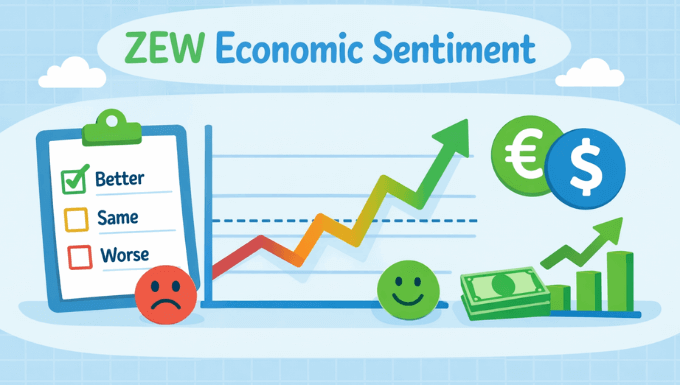
The ZEW index is calculated using a simple balance method that compares positive and negative expectations. Respondents are asked whether they expect economic conditions to improve, remain unchanged, or deteriorate over the next six months.
The index is calculated as follows:
- Percentage of positive responses
- Minus the percentage of negative responses
The final figure can range from -100 to +100. A positive reading suggests optimism, while a negative reading indicates pessimism among financial experts.
Understanding ZEW Economic Sentiment Readings
To interpret the ZEW index effectively, it helps to understand what different readings typically signal:
- Positive and rising values suggest growing confidence and expectations of economic expansion.
- Negative but improving values may indicate that pessimism is easing, which can be an early recovery signal.
- Sharp declines often reflect rising uncertainty, geopolitical risks, or economic slowdowns.
- Extreme readings can sometimes precede turning points in economic cycles.
The index is most powerful when analyzed in trend form rather than as a single data point.
Why ZEW Economic Sentiment Matters to Traders
ZEW Economic Sentiment is closely watched by traders because it often influences short-term market movements. Since it reflects expectations rather than confirmed data, it can move markets quickly when results surprise expectations.
Currency traders, in particular, monitor the release closely. Stronger-than-expected readings tend to support the euro, while weaker figures may pressure it lower. Equity markets may also react, especially European stocks tied to economic growth.
ZEW Economic Sentiment vs. ZEW Current Conditions
The ZEW survey includes two key components, and understanding the difference between them is important.
ZEW Economic Sentiment focuses on expectations for the next six months and tends to be more forward-looking and volatile.
ZEW Current Conditions reflect how respondents view the present economic situation. This measure usually changes more slowly and provides context for interpreting sentiment shifts.
Together, these two indicators offer a broader picture of economic momentum.
How ZEW Economic Sentiment Affects Financial Markets
Financial markets often react immediately when the ZEW data is released, especially if the numbers differ significantly from forecasts. The euro, European stock indices, and government bond yields are the most sensitive.
A stronger-than-expected reading can boost confidence in economic growth, leading to higher equity prices and a stronger euro. Conversely, weak readings can increase risk aversion and push investors toward safer assets.
Limitations of ZEW Economic Sentiment
While useful, ZEW Economic Sentiment should not be viewed in isolation. It reflects opinions rather than hard economic data, making it more susceptible to emotional shifts and short-term sentiment changes.
Market participants typically combine ZEW data with other indicators such as GDP growth, inflation reports, PMI data, and employment figures to form a more balanced outlook.
How Traders and Investors Use ZEW Data
Experienced traders use ZEW Economic Sentiment as a complementary tool rather than a standalone signal. It helps them assess market mood and anticipate potential trend shifts before they appear in traditional economic data.
Long-term investors may use the indicator to gauge broader economic confidence, while short-term traders often focus on the immediate market reaction following the release.