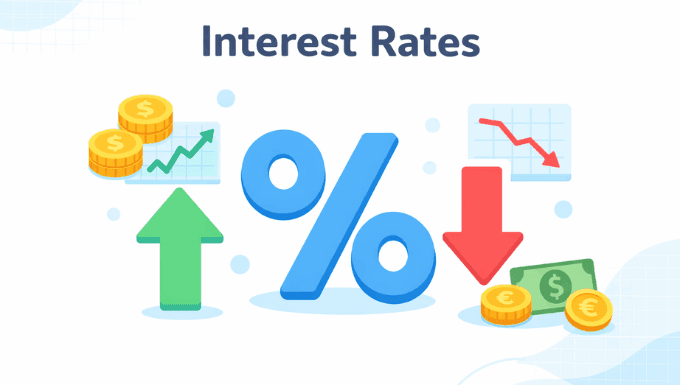
Interest rates are the price paid for borrowing money or the reward earned for saving it, and they sit at the center of almost every financial decision. When interest rates change, they influence how much people spend, save, invest, and borrow, which is why they matter to households, businesses, and entire economies.
In practical terms, interest rates affect everyday choices such as taking a loan, using a credit card, or opening a savings account. They also shape bigger outcomes like inflation, currency values, and economic growth, making them a core concept for anyone who wants to understand money.
What Interest Rates Really Mean
Interest rates represent a percentage charged by a lender or paid by a borrower over a specific period of time. This percentage reflects the cost of using money today instead of later, which is why time plays such an important role in how interest works.
At their core, interest rates balance risk and opportunity. Lenders charge interest to compensate for risk and lost use of funds, while borrowers accept that cost to access money sooner rather than waiting to save it.
How Interest Rates Work in Everyday Life
Interest rates quietly influence daily financial decisions, even when people are not actively thinking about them. From personal loans to savings accounts, they shape outcomes in visible and subtle ways.
When rates are higher, borrowing becomes more expensive, which can slow down spending. When rates are lower, borrowing is cheaper, encouraging people and businesses to spend or invest more freely.
Interest Rates on Loans and Credit
Loans use interest rates to determine how much extra a borrower repays over time. The higher the rate, the more expensive the loan becomes by the end of the term.
Common examples include:
- Mortgages for buying homes
- Personal and business loans
- Credit cards and overdrafts
Each of these uses interests differently, but all rely on the same basic principle of charging for borrowed money.
Interest Rates on Savings and Investments
Savings accounts and fixed deposits pay interest as a reward for leaving money with a bank. Higher rates usually encourage saving, while lower rates prompt people to seek alternative investments.
For long-term investors, interest rates also affect bonds, stocks, and real estate. When rates rise, safer investments become more attractive, which can reduce demand for riskier assets.
Types of Interest Rates You Should Know
Interest rates come in different forms, and understanding these differences helps avoid costly misunderstandings. Each type serves a specific purpose depending on how money is borrowed or saved.
Fixed Interest Rates
Fixed interest rates stay the same for the entire loan or investment period. This stability makes budgeting easier because payments do not change over time.
Borrowers often choose fixed rates when they want certainty, especially during periods when rates are expected to rise.
Variable Interest Rates
Variable interest rates change based on market conditions or benchmark rates. While they can start lower than fixed rates, they carry the risk of increasing in the future.
These rates are common in adjustable-rate loans and some savings products, making them suitable for people who can handle fluctuations.
Nominal vs Real Interest Rates
Nominal interest rates show the stated rate without accounting for inflation. Real interest rates adjust for inflation, offering a clearer picture of actual purchasing power gained or lost.
When inflation is high, a seemingly attractive nominal rate may deliver little real benefit to savers.
Who Sets Interest Rates and Why
Interest rates are influenced by many factors, but central banks play the leading role in setting benchmark rates. These institutions use interest rates as a tool to guide economic activity and maintain stability.
For example, in the United States, the policy rates are used to manage inflation and employment. Their decisions ripple through banks, markets, and consumer finances.
The Role of Central Banks
Central banks raise interest rates to cool down inflation and reduce excessive spending. They lower rates to stimulate borrowing and support economic growth during slowdowns.
These decisions are based on data such as inflation levels, employment figures, and economic output.
Market Forces and Lending Rates
While central banks guide benchmark rates, banks and lenders still set their own rates. Credit risk, competition, and economic confidence all influence the final rate offered to borrowers or savers.
This is why two people can receive very different interest rates for similar loans.
How Interest Rates Affect Inflation and the Economy
Interest rates and inflation are closely connected, and changes in one often influence the other. Understanding this relationship helps explain why rate decisions matter so much.
Higher interest rates tend to reduce inflation by slowing spending and borrowing. Lower rates increase money flow in the economy, which can boost growth but also raise inflation if demand rises too quickly.
Impact on Businesses and Jobs
When borrowing costs rise, businesses may delay expansion or hiring plans. This can slow job creation but also prevent overheating in the economy.
Lower rates encourage investment, which can support employment and innovation when conditions are weak.
Impact on Consumers
Consumers feel interest rate changes through loan payments, savings returns, and prices. A rate hike can increase mortgage payments, while a cut may reduce loan costs and encourage spending.
Over time, these shifts shape household financial stability and confidence.
Interest Rates and Financial Markets
Interest rates influence nearly every financial market, from currencies to stocks. Traders and investors closely watch rate decisions because even small changes can move prices significantly.
Currency values often rise when interest rates increase, as higher returns attract foreign investors. Stock markets may react negatively to rising rates, especially when borrowing becomes more expensive.
Interest Rates in Forex Trading
In the foreign exchange market, interest rate differences between countries help determine currency strength. Traders use this information to assess long-term trends and short-term movements.
Central bank announcements are among the most closely followed events in forex trading due to their potential impact.
Why Understanding Interest Rates Matters
Interest rates shape personal finances, investment outcomes, and economic stability. Knowing how they work allows people to make better decisions about borrowing, saving, and planning for the future.
Whether you are managing household expenses, running a business, or trading financial markets, interest rates provide valuable signals. By understanding them clearly, you gain insight into both everyday money choices and the broader economic picture.