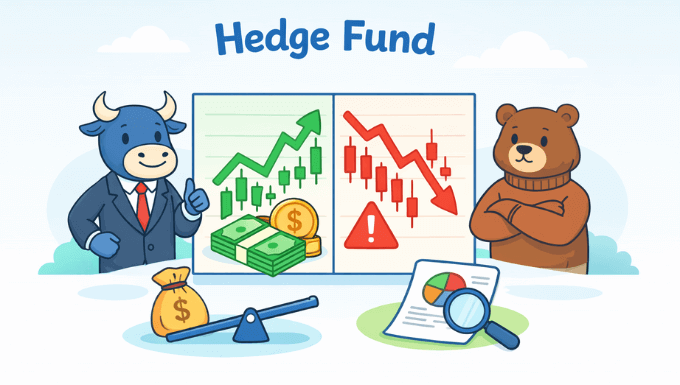
A hedge fund is a private investment vehicle that pools capital from qualified investors and uses flexible strategies to generate returns in different market conditions. Unlike traditional mutual funds, hedge funds can trade a wide range of assets and techniques, including short selling, leverage, and derivatives. In this guide, you will learn what hedge funds are, how they work, the strategies they use, their risks and fees, and whether they make sense for your investment goals.
What Is a Hedge Fund?
A hedge fund is an actively managed investment partnership designed to pursue absolute returns rather than track a market index. The structure allows managers broad freedom to buy, sell, hedge, and leverage positions across markets.
Most hedge funds accept capital only from accredited or institutional investors. This restriction exists because hedge funds are lightly regulated compared with public funds and often employ complex, higher-risk strategies.
How Hedge Funds Work
Hedge funds operate through a partnership model where the fund manager makes investment decisions on behalf of investors. The goal is to produce positive returns regardless of whether markets rise or fall.
Investors typically commit capital for a set period, known as a lock-up. During this time, withdrawals are limited so managers can execute longer-term strategies without forced selling.
Hedge Funds vs Mutual Funds
Hedge funds and mutual funds both pool investor money, but they differ sharply in flexibility, access, and objectives. Understanding these differences helps set realistic expectations.
- Investment freedom: Hedge funds can short sell, use leverage, and trade derivatives, while mutual funds face tighter rules.
- Investor access: Hedge funds are private and selective; mutual funds are open to the public.
- Performance goals: Hedge funds aim for absolute returns; mutual funds usually aim to beat a benchmark.
Common Hedge Fund Strategies
Hedge funds use a variety of strategies, each designed to exploit specific market opportunities. A clear grasp of these approaches explains why hedge fund returns can differ widely.
Long/Short Equity
Long/short equity funds buy undervalued stocks and short overvalued ones. This approach seeks to profit from stock selection while reducing exposure to overall market direction.
Global Macro
Global macro funds trade based on broad economic trends such as interest rates, currencies, and geopolitics. Positions may span bonds, commodities, equities, and currencies.
Event-Driven
Event-driven funds focus on corporate actions like mergers, restructurings, or bankruptcies. Returns depend on correctly assessing how specific events will affect prices.
Relative Value
Relative value strategies seek small price discrepancies between related securities. Profits rely on convergence rather than large market moves.
The Role of Leverage and Short Selling
Leverage allows hedge funds to amplify positions using borrowed capital. While leverage can boost returns, it also magnifies losses when trades move against expectations.
Short selling enables hedge funds to profit when asset prices fall. This tool is central to many hedging strategies but carries unique risks, including unlimited losses if prices rise sharply.
Hedge Fund Fees
Hedge fund fees are higher than those of traditional funds because of active management and specialized expertise. Investors should understand how these costs affect net returns.
Most hedge funds charge a management fee and a performance fee. A common structure is “2 and 20,” meaning a 2% annual management fee and 20% of profits.
Risks Associated With Hedge Funds
Hedge funds are not risk-free, even when strategies are designed to hedge market exposure. Awareness of these risks is essential before investing.
Key risks include market volatility, leverage exposure, liquidity constraints, and manager risk. Poor strategy execution or unexpected market events can lead to rapid losses.
Regulation and Transparency
Hedge funds operate with fewer disclosure requirements than public investment funds. This flexibility supports innovation but reduces transparency for investors.
Regulatory oversight varies by country, and reporting standards differ widely. Investors rely heavily on due diligence and trust in the manager’s processes and controls.
Who Can Invest in Hedge Funds?
Hedge funds typically accept only accredited individuals and institutions. This requirement ensures investors have sufficient financial resources and experience.
Minimum investments are often high, and capital may be locked for months or years. Hedge funds are therefore better suited to long-term, diversified portfolios.
Famous Hedge Fund Managers and Firms
Several hedge fund managers have shaped modern investing through distinctive strategies and long-term performance. Studying them offers insight into how hedge funds think about risk and opportunity.
One widely known figure is the founder of, which is recognized for its global macro approach and systematic risk management philosophy.
Performance Expectations and Reality
Hedge fund returns vary significantly by strategy and manager. While some funds achieve strong long-term results, many underperform after fees.
Investors should focus on risk-adjusted performance rather than headline returns. Consistency, drawdown control, and transparency often matter more than short-term gains.
How Hedge Funds Fit Into a Portfolio
Hedge funds can play a role in diversification by offering returns that behave differently from stocks and bonds. Their value depends on careful selection and proper sizing.
For most investors, hedge funds should complement, not replace, traditional assets. A balanced approach helps manage risk while pursuing alternative sources of return.
Key Takeaways
Hedge funds are powerful but complex investment vehicles designed for experienced investors. They offer flexibility, sophisticated strategies, and potential diversification benefits.
At the same time, higher fees, limited liquidity, and elevated risks demand thorough due diligence. Understanding how hedge funds work is essential before committing capital.