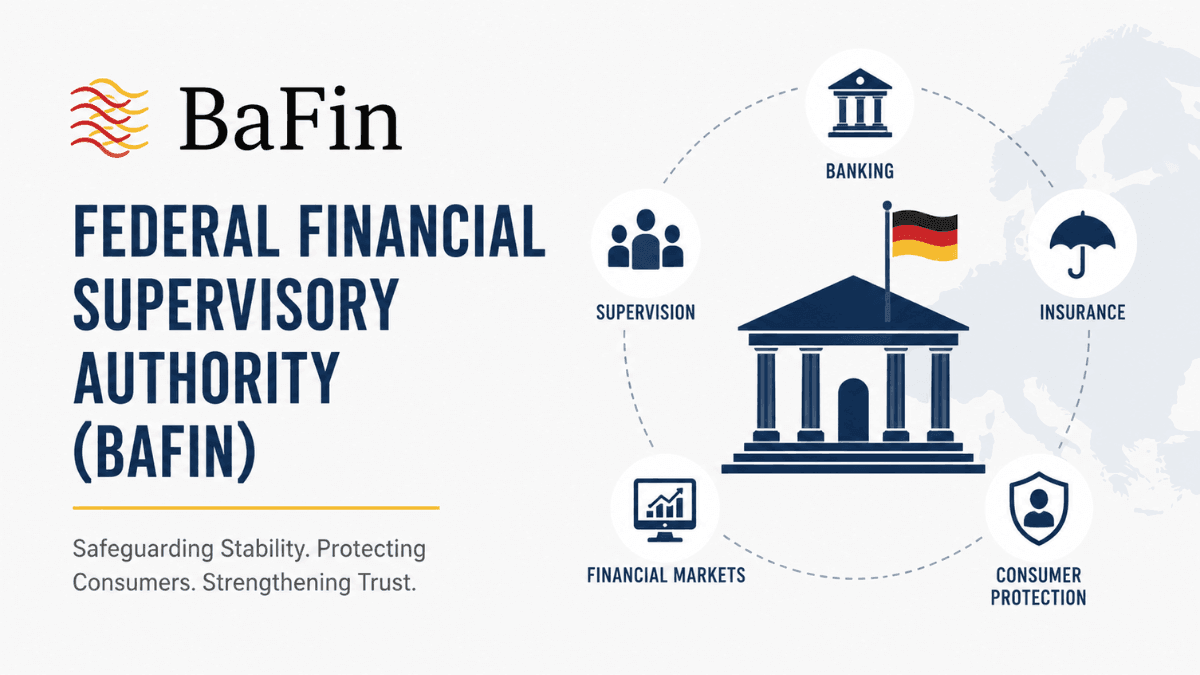
The Federal Financial Supervisory Authority (BaFin) is one of the most respected financial regulators in Europe. It oversees banks, insurance companies, investment firms, payment providers, and financial markets in Germany to ensure stability, transparency, and consumer protection.
Whether you are a trader, investor, financial institution, or simply someone interested in how financial regulation works, understanding BaFin is important. The regulator plays a critical role in maintaining confidence in Germany’s financial system while helping prevent fraud, market abuse, and systemic risks that could threaten economic stability.
Click Here To Join our Telegram Community
What Is the Federal Financial Supervisory Authority (BaFin)?
The Federal Financial Supervisory Authority, commonly known as BaFin, is Germany’s integrated financial regulator. It operates under the supervision of the German Federal Ministry of Finance and is responsible for overseeing the country’s financial sector.
BaFin was established in 2002 through the merger of three separate regulatory bodies that supervised banking, securities trading, and insurance activities. The consolidation created a single regulator capable of monitoring the increasingly interconnected financial industry.
Its primary mission is to ensure that Germany’s financial system functions safely, efficiently, and fairly. By supervising financial institutions and enforcing regulations, BaFin helps maintain trust among consumers, businesses, and investors.
Why BaFin Matters
Financial systems depend heavily on trust. People deposit money in banks, purchase insurance policies, and invest in markets because they believe their interests are protected.
BaFin helps build and maintain this trust by:
- Supervising financial institutions
- Enforcing financial laws and regulations
- Protecting consumers from misconduct
- Monitoring market integrity
- Preventing money laundering
- Maintaining financial stability
Without effective supervision, financial markets become vulnerable to fraud, manipulation, and excessive risk-taking that can harm both investors and the broader economy.
History and Formation of BaFin
Understanding BaFin’s origins helps explain why it holds such a broad regulatory mandate today.
The Need for Unified Supervision
Before 2002, Germany’s financial sector was regulated by separate authorities responsible for different industries. As financial products became more complex and institutions expanded their services across multiple sectors, fragmented oversight became less effective.
A bank might offer investment products, insurance services, and payment solutions simultaneously. Regulators needed a more coordinated approach to supervision.
Creation of BaFin
BaFin was officially established on May 1, 2002. It merged:
- The Federal Banking Supervisory Office
- The Federal Insurance Supervisory Office
- The Federal Securities Supervisory Office
This integrated structure enabled regulators to better monitor financial institutions operating across multiple sectors.
Core Responsibilities of BaFin
BaFin’s responsibilities extend across nearly every area of Germany’s financial industry.
Banking Supervision
One of BaFin’s most important functions is supervising banks and credit institutions operating in Germany.
The regulator ensures that banks maintain sufficient capital reserves, manage risks appropriately, and comply with applicable laws. This oversight helps protect depositors and reduces the likelihood of financial crises.
Banking supervision includes:
- Licensing financial institutions
- Reviewing risk management systems
- Monitoring liquidity and capital requirements
- Conducting inspections
- Enforcing compliance standards
Insurance Supervision
Insurance companies play a vital role in protecting individuals and businesses from financial loss. BaFin supervises insurers to ensure they remain financially sound and capable of meeting policyholder obligations.
The regulator reviews solvency levels, governance structures, and operational practices to protect consumers who rely on insurance coverage.
Securities and Market Oversight
Financial markets must operate fairly for investors to have confidence in them.
BaFin monitors securities markets for activities such as:
- Insider trading
- Market manipulation
- Unauthorized financial services
- Disclosure violations
- Prospectus compliance
This oversight helps create a transparent environment where investors can make informed decisions.
Consumer Protection
Protecting consumers has become an increasingly important part of BaFin’s mandate.
The authority investigates complaints, issues warnings about unauthorized providers, and takes action against firms that violate consumer protection laws.
Consumers can use BaFin’s resources to verify whether a financial company is authorized to operate in Germany.
How BaFin Regulates Financial Institutions
Financial supervision involves much more than simply checking whether firms follow rules.
Licensing Requirements
Companies offering regulated financial services in Germany typically need authorization before they can operate.
During the licensing process, BaFin evaluates factors such as:
- Management expertise
- Business plans
- Capital adequacy
- Organizational structure
- Risk controls
This screening process helps prevent unsuitable firms from entering the market.
Ongoing Monitoring
Authorization is only the beginning.
BaFin continuously monitors regulated institutions through regular reporting requirements, audits, inspections, and supervisory reviews. This allows regulators to identify emerging risks before they become serious problems.
Enforcement Actions
When firms violate regulations, BaFin has the authority to intervene.
Potential actions include:
- Issuing warnings
- Imposing fines
- Restricting business activities
- Revoking licenses
- Referring matters for criminal prosecution
The severity of the action typically depends on the nature and impact of the violation.
BaFin and Forex Brokers
Forex traders often encounter BaFin when researching broker regulation.
Why BaFin Regulation Matters for Traders
A broker regulated by BaFin must comply with strict standards designed to protect clients.
These requirements often include:
- Segregation of client funds
- Capital adequacy standards
- Transparent business practices
- Risk management procedures
- Compliance monitoring
While regulation does not eliminate all investment risks, it can reduce the likelihood of dealing with fraudulent or poorly managed firms.
Investor Protection Measures
BaFin-regulated brokers are expected to provide clear disclosures about products, risks, fees, and trading conditions.
This transparency helps traders better understand the risks associated with leveraged products such as forex contracts, contracts for difference (CFDs), and other derivatives.
Cross-Border Operations
Because Germany is part of the European Union, many firms regulated elsewhere in Europe may operate in Germany under applicable European regulatory frameworks.
BaFin works closely with other European regulators to ensure consistent supervision and investor protection across borders.
BaFin’s Role in Combating Financial Crime
Financial crime presents a significant threat to market integrity and economic stability.
Anti-Money Laundering Oversight
Money laundering involves disguising illegally obtained funds to make them appear legitimate.
BaFin supervises financial institutions to ensure they implement effective anti-money laundering controls, including customer verification procedures, transaction monitoring systems, and suspicious activity reporting.
Fighting Terrorist Financing
Financial institutions must also maintain safeguards designed to prevent the financing of terrorism.
BaFin monitors compliance with these requirements and works with domestic and international authorities when necessary.
Preventing Market Abuse
Market abuse undermines investor confidence and creates unfair advantages.
The regulator actively investigates:
- Insider dealing
- Market manipulation
- False disclosures
- Misleading information
By enforcing market conduct rules, BaFin helps preserve fair competition in financial markets.
BaFin and Consumer Warnings
One of BaFin’s most visible public functions is issuing warnings about unauthorized companies.
Identifying Unauthorized Providers
Fraudulent financial operators frequently target consumers through websites, social media advertisements, and unsolicited communications.
BaFin regularly publishes warnings about companies that may be offering financial services without proper authorization.
Checking these warnings can help investors avoid scams before committing funds.
Educating the Public
Consumer education is another important component of financial protection.
BaFin provides information about:
- Investment risks
- Fraud prevention
- Consumer rights
- Financial products
- Regulatory requirements
An informed consumer is often the first line of defense against financial misconduct.
BaFin’s Relationship With European Regulators
Financial regulation increasingly involves international cooperation.
Cooperation Within the European Union
BaFin works closely with European supervisory bodies to maintain consistent standards across member states.
This cooperation is particularly important because many financial institutions operate internationally and provide services across borders.
Participation in Global Regulatory Networks
The authority also collaborates with international organizations and regulators worldwide.
These partnerships help address emerging challenges such as cyber threats, digital assets, and cross-border financial crime.
BaFin and Cryptocurrency Regulation
The rapid growth of cryptocurrencies has introduced new regulatory challenges.
Supervising Crypto Activities
BaFin has been among the more active European regulators in addressing digital asset markets.
Depending on the services offered, crypto businesses may require authorization and must comply with applicable regulatory requirements.
Balancing Innovation and Protection
Regulators face the challenge of encouraging innovation while protecting consumers from excessive risk.
BaFin seeks to strike this balance by allowing legitimate innovation while enforcing standards designed to reduce fraud and misconduct.
Challenges Facing BaFin
Like all financial regulators, BaFin operates in an environment that is constantly evolving.
Technological Innovation
Fintech companies, artificial intelligence, digital payments, and blockchain technology continue to reshape financial services.
Regulators must adapt quickly while ensuring that consumer protections remain effective.
Cybersecurity Risks
Cyberattacks represent a growing threat to financial institutions.
BaFin increasingly focuses on operational resilience and cybersecurity standards to help protect critical financial infrastructure.
Global Financial Complexity
Modern financial markets are highly interconnected.
Events occurring in one country can rapidly affect institutions and investors elsewhere, requiring regulators to maintain a global perspective.
Criticisms and Lessons Learned
No regulator is immune from criticism.
BaFin has faced scrutiny during certain high-profile financial scandals, particularly when questions arose regarding the effectiveness of oversight and enforcement actions.
These experiences have led to reforms, increased transparency efforts, and strengthened supervisory processes. Continuous improvement is essential for maintaining public confidence and adapting to new challenges.
How Investors Can Verify a BaFin-Regulated Firm
Before opening an account with a financial company, it is wise to verify its regulatory status.
Investors should:
- Check the firm’s authorization status
- Confirm licensing details
- Review public warnings
- Verify company information directly with regulatory records
- Be cautious of unrealistic promises or guaranteed profits
Taking a few minutes to verify a firm’s credentials can significantly reduce the risk of fraud.
The Future of BaFin
The future of financial supervision will likely involve greater use of technology, enhanced cross-border cooperation, and stronger oversight of emerging financial products.
As digital assets, artificial intelligence, and innovative payment systems continue to evolve, BaFin will remain central to Germany’s efforts to maintain a secure, transparent, and resilient financial system.
Its ability to adapt while protecting consumers and preserving market stability will determine its effectiveness in the years ahead.
Conclusion
The Federal Financial Supervisory Authority (BaFin) serves as the backbone of financial regulation in Germany. Through its supervision of banks, insurers, investment firms, and financial markets, the authority helps maintain stability, combat financial crime, and protect consumers.
For investors and traders, BaFin regulation often serves as a strong indicator that a financial institution is subject to rigorous oversight standards. While regulation cannot eliminate investment risk, it plays a crucial role in creating a safer and more transparent financial environment.
As financial markets continue to evolve, BaFin’s role will become even more important. From traditional banking supervision to cryptocurrency oversight and cybersecurity resilience, the regulator remains a key guardian of trust within Germany’s financial system.
Frequently Asked Questions
What does BaFin stand for?
BaFin stands for the Federal Financial Supervisory Authority, Germany’s integrated regulator responsible for supervising banks, insurance companies, financial markets, and investment firms.
Is BaFin a government agency?
BaFin is an independent federal institution operating under the legal and technical supervision of Germany’s Federal Ministry of Finance.
Does BaFin regulate forex brokers?
Yes. Forex brokers providing regulated financial services in Germany may require authorization from BaFin and must comply with applicable regulatory requirements.
How does BaFin protect investors?
BaFin protects investors through supervision, enforcement actions, consumer warnings, market monitoring, and regulations designed to promote transparency and fair treatment.
Can consumers file complaints with BaFin?
Yes. Consumers can submit complaints regarding regulated financial institutions operating under BaFin’s supervision.
Does BaFin regulate cryptocurrency companies?
Certain cryptocurrency-related activities fall within BaFin’s regulatory scope and may require authorization depending on the services offered.
Why is BaFin important?
BaFin helps maintain financial stability, protects consumers, combats financial crime, and promotes trust in Germany’s financial system.
Trade Anytime, Anywhere with XM
Take your trading to the next level with a globally trusted forex and CFD broker. Enjoy competitive spreads, fast execution, and reliable customer support while trading securely.
With XM, you get access to powerful trading platforms, real-time charts, flexible account types, and advanced tools to help you analyze the markets and manage your trades efficiently. Start your journey today by opening a trading account for free and join millions of traders worldwide.
✅ Open an Account with XM