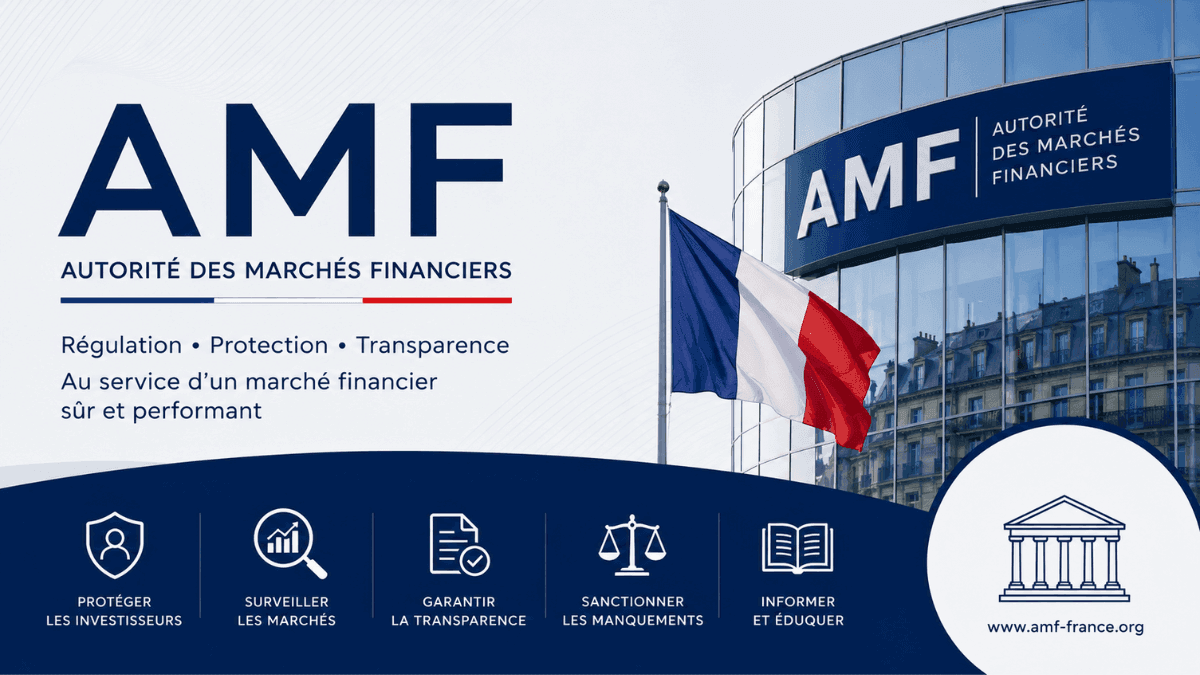
The Autorité des Marchés Financiers (AMF) is the primary financial regulator responsible for overseeing France’s financial markets. Whether you are an investor, trader, asset manager, financial advisor, or broker, understanding the AMF is essential, as it plays a central role in maintaining market integrity, protecting investors, and ensuring transparency throughout the French financial system.
Financial markets function best when participants trust the system. The AMF exists to build and maintain that trust. Through supervision, enforcement, education, and regulation, the authority helps create a safer environment where investors can make informed decisions and companies can raise capital efficiently.
Click Here To Join our Telegram Community
What is the Autorité des Marchés Financiers (AMF)?
The AMF is France’s independent public authority responsible for regulating and supervising the country’s financial markets. It was established in 2003 through the merger of several existing regulatory bodies to create a stronger and more unified financial watchdog.
Its mission goes beyond simply enforcing rules. The AMF seeks to ensure that financial markets operate fairly, transparently, and efficiently while safeguarding investors from misconduct, fraud, and market abuse.
The regulator oversees a broad range of financial activities, including securities trading, investment funds, public offerings, financial intermediaries, and listed companies.
Why Was the AMF Created?
The creation of the AMF was driven by the need for a more streamlined regulatory framework in France.
Before 2003, financial supervision was divided among multiple agencies. While each organization had specific responsibilities, the fragmented structure sometimes created inefficiencies and overlapping oversight.
The AMF consolidated these responsibilities into a single authority capable of responding more effectively to increasingly complex financial markets. This unified approach improved regulatory consistency and strengthened investor confidence.
The Main Objectives of the AMF
The AMF operates with several core objectives that guide its activities and decision-making.
Protecting Investors
Investor protection sits at the heart of the AMF’s mission.
The regulator ensures that individuals receive accurate, clear, and timely information before making investment decisions. It also investigates complaints, identifies scams, and takes action against firms or individuals that violate financial regulations.
For example, if an unauthorized broker targets French investors with misleading advertising, the AMF can issue public warnings and pursue enforcement measures.
Maintaining Market Integrity
Financial markets depend on fairness and transparency.
The AMF monitors trading activity to detect market manipulation, insider trading, and other forms of misconduct. By enforcing strict standards, it helps maintain a level playing field for all participants.
Without this oversight, investors could lose confidence in market fairness, reducing participation and liquidity.
Supporting Efficient Capital Markets
Businesses rely on capital markets to raise funds for growth and expansion.
The AMF helps ensure that companies seeking investment provide accurate disclosures to potential investors. This transparency enables capital to flow more efficiently through the economy.
Promoting Financial Education
Many investment mistakes occur because people do not fully understand financial products or risks.
The AMF provides educational resources, guides, warnings, and awareness campaigns designed to help consumers make better-informed financial decisions.
How the AMF Protects Investors
Investor protection is one of the most visible aspects of the AMF’s work.
The authority actively monitors financial products, marketing practices, and investment services to identify risks that may harm consumers.
Some of its investor protection activities include:
- Publishing warnings about unauthorized firms
- Investigating suspected investment scams
- Monitoring financial promotions
- Providing investor education resources
- Handling complaints and mediation services
- Requiring clear disclosure of risks
This proactive approach helps reduce the likelihood that investors fall victim to fraudulent schemes.
Key Areas Regulated by the AMF
The AMF oversees a wide range of financial market participants and activities.
Investment Firms
Investment firms operating in France must comply with AMF regulations designed to protect clients and maintain market stability.
The regulator assesses whether firms meet the required standards for governance, transparency, and conduct.
Asset Management Companies
France hosts one of Europe’s largest asset management industries.
The AMF supervises asset management companies that manage mutual funds, exchange-traded funds (ETFs), and other investment vehicles. The regulator ensures these firms act in the best interests of investors and comply with applicable regulations.
Listed Companies
Publicly traded companies must provide accurate information to investors.
The AMF reviews financial disclosures, prospectuses, and market announcements to ensure investors receive reliable information when evaluating investment opportunities.
Collective Investment Schemes
Investment funds pool money from multiple investors.
The AMF regulates these products to ensure that fund managers follow investment rules, manage risks appropriately, and provide transparent reporting.
The AMF and Financial Market Transparency
Transparency is a cornerstone of healthy financial markets.
Investors need access to reliable information before they can evaluate opportunities and risks. The AMF promotes transparency by enforcing disclosure requirements for listed companies and financial institutions.
Companies must publish material information that could influence investment decisions. This includes financial results, significant business developments, mergers, acquisitions, and major corporate events.
When investors have access to consistent information, markets tend to operate more efficiently and fairly.
How the AMF Detects Market Abuse
Financial misconduct can undermine confidence in the market.
The AMF uses advanced monitoring systems and investigative tools to identify suspicious trading patterns that may indicate wrongdoing.
Insider Trading
Insider trading occurs when someone uses confidential, non-public information to gain an unfair advantage in the market.
The AMF investigates cases where individuals may have traded securities based on information unavailable to the general public.
Market Manipulation
Market manipulation involves actions designed to create false or misleading impressions about the supply, demand, or price of a financial instrument.
Examples may include spreading false information or executing trades intended to distort market prices.
Misleading Disclosures
Investors depend on accurate corporate information.
The AMF investigates situations where companies or market participants provide incomplete, inaccurate, or misleading information that could influence investment decisions.
AMF Enforcement Powers
A regulator is only effective if it can enforce the rules it establishes.
The AMF has significant enforcement authority, allowing it to investigate violations and impose sanctions when necessary.
Possible enforcement actions include:
- Financial penalties
- Public reprimands
- Restrictions on business activities
- Temporary suspensions
- Referrals to judicial authorities
These powers help deter misconduct and reinforce confidence in the regulatory system.
The AMF’s Role in Forex and CFD Trading
Retail forex and Contracts for Difference (CFD) trading have become increasingly popular among individual investors.
These products often involve leverage, which can magnify both profits and losses. Because of the risks involved, the AMF closely monitors brokers and financial institutions offering these products to French residents.
The regulator has historically taken a firm stance on misleading advertising and aggressive marketing practices within the forex and CFD industry.
Investors considering leveraged trading products should always verify whether a broker is properly authorized and compliant with applicable regulations.
The AMF and Cryptocurrency Regulation
Digital assets have introduced new opportunities and challenges for regulators worldwide.
The AMF plays an important role in overseeing aspects of the cryptocurrency ecosystem within France. While cryptocurrencies operate differently from traditional securities, investor protection concerns remain similar.
The regulator evaluates certain crypto-related service providers and monitors emerging risks associated with digital assets, token offerings, and crypto investment products.
As the cryptocurrency market evolves, the AMF continues adapting its regulatory framework to address new developments and technologies.
How to Check Whether a Firm Is Authorized
Before opening an investment account, it is essential to conduct due diligence.
Investors should verify that a financial firm is properly authorized and regulated before depositing funds.
A good verification process includes:
- Checking official regulatory registers
- Reviewing the firm’s regulatory status
- Confirming contact information
- Examining investor warnings
- Researching the firm’s reputation
These steps can help investors avoid unauthorized firms and potential scams.
Benefits of AMF Regulation
Regulation provides important protections for both investors and market participants.
When firms operate under AMF supervision, investors generally benefit from stronger standards regarding transparency, governance, and conduct.
Key advantages include:
- Greater investor protection
- Enhanced market transparency
- Reduced fraud risk
- Stronger compliance requirements
- Improved confidence in financial markets
- Better access to dispute resolution mechanisms
While regulation cannot eliminate all investment risks, it significantly reduces the likelihood of misconduct and abuse.
Challenges Facing the AMF
Financial markets continue to evolve rapidly.
Technological innovation, algorithmic trading, artificial intelligence, decentralized finance, and cryptocurrency markets create new regulatory challenges. The AMF must continuously adapt its approach to remain effective in an increasingly complex environment.
Balancing innovation with investor protection is one of the regulator’s most significant ongoing responsibilities.
The authority must encourage market development while ensuring that new products and technologies do not expose investors to unnecessary risks.
The Future of Financial Regulation in France
Financial regulation is becoming increasingly international.
Many financial firms operate across borders, requiring regulators to cooperate with counterparts throughout Europe and beyond. The AMF works closely with European regulatory institutions to promote consistent standards and coordinated supervision.
As financial markets become more digital, the regulator will likely place greater emphasis on cybersecurity, fintech innovation, digital assets, and data-driven supervision.
Why the Autorité des Marchés Financiers Matters
The Autorité des Marchés Financiers serves as a critical pillar of France’s financial system. Its work helps protect investors, maintain market integrity, support economic growth, and strengthen confidence in financial markets.
Whether you are investing in stocks, mutual funds, forex products, CFDs, or emerging digital assets, the AMF plays an important role in creating a fair and transparent marketplace. By enforcing rules, monitoring misconduct, and promoting investor education, the authority helps ensure that financial markets remain trustworthy and efficient for everyone involved.
Frequently Asked Questions
What does the Autorité des Marchés Financiers (AMF) do?
The AMF regulates and supervises France’s financial markets. Its responsibilities include investor protection, market oversight, enforcement of regulations, and promoting transparency.
Is the AMF a government agency?
The AMF is an independent public authority. While it operates within France’s regulatory framework, it functions independently when carrying out its supervisory and enforcement responsibilities.
Does the AMF regulate forex brokers?
Yes. The AMF oversees certain aspects of forex and CFD trading activities offered to French investors and monitors compliance with relevant financial regulations.
How does the AMF protect investors?
The AMF protects investors through supervision, enforcement actions, educational resources, scam warnings, disclosure requirements, and complaint resolution mechanisms.
Can the AMF fine companies?
Yes. The AMF has enforcement powers that allow it to impose financial penalties and other sanctions on firms and individuals that violate regulations.
Does the AMF regulate cryptocurrencies?
The AMF plays a role in supervising certain crypto-related activities and service providers while addressing risks associated with digital asset investments.
Why is AMF regulation important?
AMF regulation helps maintain fair, transparent, and efficient financial markets. It reduces fraud risks, promotes investor confidence, and supports the stability of France’s financial system.
Trade Anytime, Anywhere with XM
Take your trading to the next level with a globally trusted forex and CFD broker. Enjoy competitive spreads, fast execution, and reliable customer support while trading securely.
With XM, you get access to powerful trading platforms, real-time charts, flexible account types, and advanced tools to help you analyze the markets and manage your trades efficiently. Start your journey today by opening a trading account for free and join millions of traders worldwide.
✅ Open an Account with XM