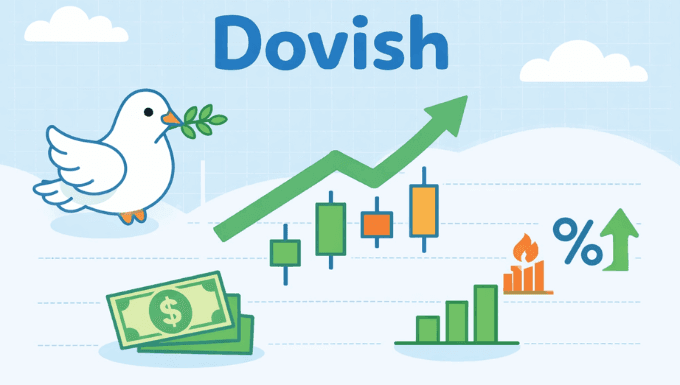
Dovish is used to describe a policy stance that prioritizes economic growth and employment over controlling inflation, often through lower interest rates and supportive monetary policy. In finance and economics, being dovish usually signals a preference for easier financial conditions rather than strict tightening.
In the first paragraph of any central bank commentary or market analysis, the word dovish often appears when policymakers hint at patience, flexibility, or a willingness to stimulate the economy. Traders, investors, and economists pay close attention to this language because it can strongly influence currencies, stocks, and bonds.
- What Does Dovish Mean?
- Dovish vs Hawkish
- What Is a Dovish Monetary Policy?
- Why Central Banks Turn Dovish
- Dovish Language in Central Bank Statements
- Dovish Stance and Interest Rates
- How Dovish Policy Affects Inflation
- Impact of Dovish Signals on Financial Markets
- What Dovish Means in Forex Trading
- Dovish Outlook in Stock Markets
- Dovish vs Neutral Policy Stance
- Real-World Examples
- Dovish Signals vs Dovish Actions
- Why Traders Closely Watch Dovish Shifts
- Common Misunderstandings About Dovish Policy
- Final Thoughts
What Does Dovish Mean?
Dovish refers to an approach that favors economic support, even if it means accepting slightly higher inflation in the short term. The opposite of dovish is hawkish, which focuses on fighting inflation through higher interest rates and tighter policy.
This term comes from the contrast between doves and hawks in political language. Doves are seen as calm and peace-seeking, while hawks are aggressive and strict. In monetary policy, a dovish stance signals caution about tightening too quickly.
Dovish vs Hawkish
Understanding the difference between dovish and hawkish positions helps make sense of central bank decisions and market reactions. These labels describe tone, priorities, and policy direction rather than fixed rules.
A dovish stance usually includes:
- Support for low or unchanged interest rates
- Concern about unemployment or weak economic growth
- Willingness to use stimulus tools if conditions worsen
A hawkish stance, by contrast, emphasizes inflation control, tighter financial conditions, and readiness to raise rates even if growth slows.
What Is a Dovish Monetary Policy?
A dovish monetary policy is one that aims to make borrowing cheaper and money more available in the economy. Central banks use this approach when growth is slow, unemployment is high, or financial conditions are fragile.
This type of policy may involve:
- Cutting interest rates or keeping them low for longer
- Slowing down or pausing rate hikes
- Using tools such as quantitative easing
The goal is to encourage spending, investment, and lending without causing long-term instability.
Why Central Banks Turn Dovish
Central banks do not choose a dovish stance randomly. Their decisions are guided by economic data, risk assessments, and long-term stability goals.
A central bank may become dovish when economic growth weakens, inflation falls below targets, or external shocks threaten stability. Events such as recessions, financial crises, or global slowdowns often push policymakers toward a more supportive position.
Dovish Language in Central Bank Statements
Dovish signals are often communicated through carefully chosen words rather than direct actions. Markets analyze every sentence in policy statements, speeches, and press conferences.
Common dovish phrases include references to “patience,” “data dependence,” “downside risks,” or “supporting the recovery.” Even subtle changes in tone can move markets quickly when investors sense a shift toward easier policy.
Dovish Stance and Interest Rates
Interest rates are the clearest expression of a dovish stance. When policymakers signal that rates will remain low, borrowing becomes more attractive for households and businesses.
Lower rates reduce the cost of loans, mortgages, and corporate financing. While this supports growth, it can also reduce returns on savings, which is one reason dovish policies can be controversial.
How Dovish Policy Affects Inflation
Dovish policy generally tolerates higher inflation risks in exchange for stronger economic activity. Central banks accept this trade-off when inflation is already low or when deflation is a greater concern.
If inflation begins to rise too quickly, a dovish stance may be reconsidered. For this reason, dovish does not mean careless; it reflects a calculated balance between growth and price stability.
Impact of Dovish Signals on Financial Markets
Financial markets react quickly to dovish signals because they affect future returns and risk perceptions. The reaction often differs across asset classes.
Stocks tend to benefit from dovish policy due to lower borrowing costs and improved growth expectations. Bonds may rise as yields fall, while currencies often weaken as lower rates reduce their attractiveness to investors.
What Dovish Means in Forex Trading
In forex trading, dovish central banks are usually associated with weaker currencies. Lower interest rates reduce the yield advantage of holding that currency.
For example, if a central bank signals a dovish outlook while others remain neutral or hawkish, traders may sell that currency in favor of higher-yielding alternatives. This is why central bank speeches are major drivers of currency volatility.
Dovish Outlook in Stock Markets
Equity markets often respond positively to dovish policy expectations. Lower rates support company earnings by reducing financing costs and encouraging consumer spending.
However, if a dovish shift is driven by fear of recession, stocks may react cautiously. Context matters, and traders look beyond the label to understand the underlying economic message.
Dovish vs Neutral Policy Stance
A dovish stance is different from a neutral one. Neutral policy suggests that interest rates are neither stimulating nor restricting the economy.
When policymakers describe their stance as neutral, they indicate balance. Dovish language, on the other hand, clearly signals a preference for support rather than restraint.
Real-World Examples
Major central banks have adopted dovish positions during economic stress. Institutions such as the and the have all used dovish policies during slowdowns.
These periods often include rate cuts, stimulus programs, and strong forward guidance aimed at reassuring markets and supporting growth.
Dovish Signals vs Dovish Actions
It is important to separate dovish talk from dovish action. A central bank may sound dovish without immediately changing rates.
Markets sometimes react strongly to language alone, especially when expectations shift. Actual policy moves usually confirm or correct these expectations over time.
Why Traders Closely Watch Dovish Shifts
Dovish shifts often mark turning points in market cycles. They can signal the end of tightening phases or the start of new growth-supportive periods.
For traders, identifying dovish signals early can provide opportunities in currencies, bonds, and equities. This makes understanding the concept essential for anyone involved in financial markets.
Common Misunderstandings About Dovish Policy
Dovish does not mean reckless or politically motivated. Central banks remain data-driven even when they favor supportive policy.
Another common misunderstanding is that dovish policy always leads to inflation. While it increases inflation risk, outcomes depend on broader economic conditions.
Final Thoughts
Dovish is more than a buzzword; it is a key concept that shapes monetary policy and market behavior. Understanding its meaning helps investors and traders interpret central bank decisions with greater confidence.
In simple terms, dovish means “willing to support the economy with easier money.” It reflects concern about growth and jobs rather than fear of inflation. This straightforward idea explains why the term appears so often in news headlines, trading platforms, and economic analysis.
By recognizing dovish signals and their effects, readers can better navigate interest rate changes, currency movements, and broader economic trends.