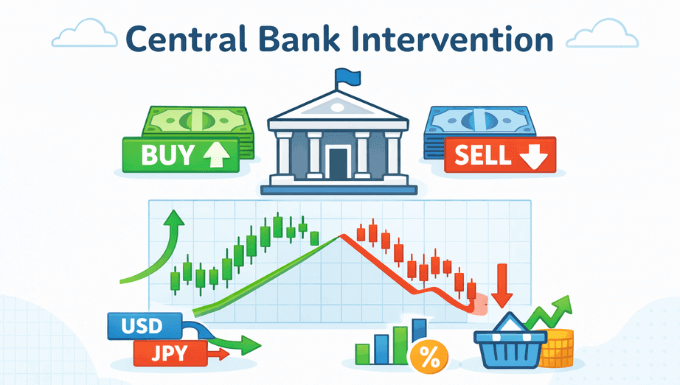
Central bank intervention is one of the most powerful forces in modern financial markets, shaping currency values, inflation trends, and overall economic stability. In simple terms, it refers to deliberate actions taken by a country’s central bank to influence its economy or financial markets, especially the foreign exchange market.
Understanding how and why these interventions occur helps traders, investors, and everyday citizens make better sense of sudden market moves and policy decisions.
What Is Central Bank Intervention?
Central bank intervention is the direct or indirect involvement of a central bank in financial markets to influence economic conditions. This involvement often targets exchange rates, interest rates, liquidity, or inflation when market forces alone are not producing desired outcomes.
These actions are usually motivated by the need to stabilize the economy, restore confidence, or correct sharp imbalances. While some interventions are highly visible, others are subtle and only revealed later through official data or statements.
Why Central Banks Intervene in Markets
Central banks do not intervene randomly; their actions are typically responses to economic stress or policy objectives. When markets move too quickly or in a disorderly way, authorities may step in to restore balance.
Common reasons for intervention include:
- Preventing excessive currency volatility that could hurt trade or investment
- Controlling inflation or deflation pressures
- Supporting economic growth during downturns
- Protecting financial stability during crises
Each reason reflects a broader mandate to maintain price stability and confidence in the financial system.
Main Tools Used in Central Bank Intervention
Central banks have several tools at their disposal, ranging from direct market activity to policy signals. These tools vary in visibility and effectiveness depending on market conditions.
Foreign Exchange Market Operations
Foreign exchange intervention involves buying or selling a country’s currency in the open market. When a central bank buys its own currency, it aims to strengthen it; selling the currency usually aims to weaken it.
This approach is most effective in thin or highly sensitive markets. In large, liquid markets, repeated or coordinated interventions may be required to achieve lasting results.
Interest Rate Adjustments
Interest rates influence capital flows and currency demand. By raising or lowering benchmark rates, central banks can indirectly affect exchange rates and inflation expectations.
Rate changes also send strong signals about future policy direction. Even small adjustments can trigger significant market reactions when expectations shift.
Open Market Operations and Liquidity Measures
Through buying or selling government securities, central banks control money supply and short-term interest rates. During crises, they may also provide emergency liquidity to banks to prevent system-wide stress.
These measures often work quietly in the background but play a critical role in keeping financial systems functioning smoothly.
Verbal Intervention (Forward Guidance)
Sometimes words are as powerful as actions. Verbal intervention involves public statements or guidance intended to influence market expectations without immediate transactions.
When credible, such communication can stabilize markets quickly. When credibility is weak, markets may ignore or challenge the message.
Types of Central Bank Intervention
Not all interventions are the same, and understanding their form helps explain their potential impact. The approach chosen depends on urgency, resources, and policy goals.
Sterilized vs. Unsterilized Intervention
Sterilized intervention offsets the impact of currency operations on the domestic money supply. This allows the central bank to influence exchange rates without changing monetary conditions.
Unsterilized intervention, by contrast, allows money supply to change, reinforcing the policy signal but also affecting inflation and interest rates.
Unilateral vs. Coordinated Intervention
Unilateral intervention is carried out by a single central bank acting alone. This is common but may have a limited effect in global markets.
Coordinated intervention involves multiple central banks acting together. Such actions are rare but often more powerful because they signal broad international agreement.
Real-World Examples
Historical examples help clarify how intervention works in practice and why markets take it seriously.
The Fed has intervened during financial crises by providing massive liquidity and cutting interest rates to stabilize markets. These actions were especially visible during the 2008 global financial crisis.
They have used both verbal guidance and asset purchases to support the euro and prevent fragmentation within the eurozone. Clear communication has often been as important as direct action.
It is known for frequent currency-related actions aimed at limiting excessive yen strength, which can hurt exports and economic growth.
How Central Bank Intervention Affects Forex Markets
For forex traders, central bank intervention can override technical patterns and short-term fundamentals. A single announcement or unexpected market operation can cause sharp price moves within minutes.
Intervention often increases volatility in the short term. Over the longer term, its success depends on whether it aligns with broader economic trends and market expectations.
Impact on Inflation, Trade, and the Wider Economy
Beyond currency markets, intervention affects everyday economic outcomes. A weaker currency can boost exports but raise import costs, contributing to inflation. A stronger currency can lower inflation but hurt export competitiveness.
Central banks must balance these trade-offs carefully. Poorly timed or excessive intervention can create distortions that require even stronger action later.
Risks and Limitations of Central Bank Intervention
Intervention is not a guaranteed solution, and it carries real risks. Markets may challenge a central bank’s resolve if policies conflict with economic fundamentals.
Key limitations include:
- High financial cost from repeated market operations
- Reduced credibility if interventions fail
- Unintended inflation or asset bubbles
Because of these risks, most central banks treat intervention as a last resort rather than a routine tool.
Central Bank Intervention vs. Free Market Forces
A key debate in economics centers on how much influence central banks should exert. Free markets allocate resources efficiently over time, but they can also overshoot and create instability.
Intervention attempts to smooth extremes without fully replacing market forces. The challenge lies in knowing when to step in and when to step back.
What Traders and Investors Should Watch
Understanding intervention helps market participants manage risk more effectively. Sudden moves often make sense once policy motives are clear.
Important signals to monitor include:
- Central bank statements and press conferences
- Unexpected interest rate decisions
- Sharp moves during low-liquidity periods
Awareness of these factors can prevent costly surprises and improve decision-making.
Final Thoughts
Central bank intervention plays a critical role in maintaining economic and financial stability, especially during periods of stress. While it cannot permanently override market fundamentals, it can buy time, restore confidence, and guide economies toward balance. For anyone involved in finance, trading, or economic policy, understanding this concept is essential for interpreting market behavior and long-term trends.