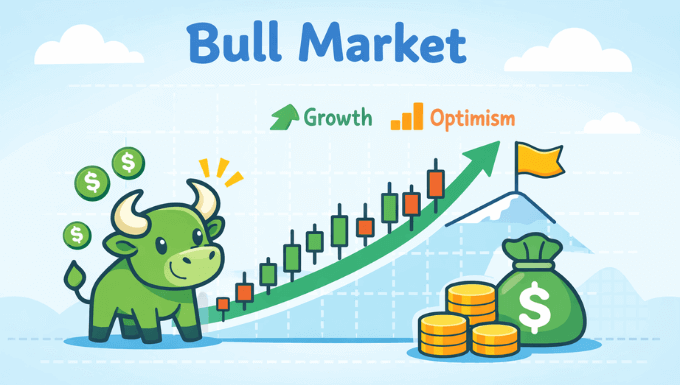
A bull market describes a period when asset prices rise steadily over time, driven by confidence, strong demand, and positive economic signals. While the term is often associated with stocks, it also applies to other markets such as forex, commodities, and cryptocurrencies. Understanding how a bull market works helps investors make informed decisions, manage risk, and avoid emotional mistakes during periods of optimism.
This guide explains the concept clearly, without unnecessary jargon, so both beginners and experienced readers can recognize a bull market, understand its drivers, and act responsibly within it.
What Is a Bull Market?
A bull market is commonly defined as a sustained rise in prices, typically measured as a 20% or greater increase from recent lows. This upward movement usually reflects growing confidence among investors and expectations of continued economic strength.
Beyond price increases, a bull market is also a psychological environment. Participants tend to believe that opportunities outweigh risks, which encourages buying and long-term investing rather than short-term speculation.
Why It Is Called a Bull Market
The term “bull market” comes from the way a bull attacks—thrusting its horns upward. This upward motion symbolizes rising prices and positive momentum in financial markets.
By contrast, a bear market reflects downward pressure, mirroring how a bear swipes its paws downward. These metaphors help describe market direction in a simple, memorable way.
Key Characteristics of a Bull Market
A bull market shows itself through several clear and repeatable traits. These features tend to appear together rather than in isolation.
- Prices trend higher over months or years, not just days
- Investor confidence and participation increase steadily
- Economic data, such as employment and earnings, improve
- Market pullbacks are usually short and followed by recoveries
These characteristics help distinguish a true bull market from a brief rally or short-term price spike.
Economic Factors That Drive a Bull Market
Bull markets do not happen by chance, and they are usually supported by favorable economic conditions. These conditions create an environment where businesses can grow, and investors feel comfortable taking risks.
Strong economic growth, low unemployment, and rising corporate profits often provide the foundation. Supportive interest rate policies and stable inflation also make borrowing and expansion easier, which fuels further price appreciation.
Phases of a Bull Market
A bull market typically develops in stages, and each phase reflects changing investor behavior. Recognizing these phases can help investors stay disciplined.
Early Stage: Recovery and Cautious Optimism
This phase begins after a market downturn, when prices start to recover quietly. Confidence is still fragile, and many investors remain skeptical due to recent losses.
Opportunities are often overlooked at this stage, as only experienced or patient participants tend to buy early.
Middle Stage: Broad Participation and Growth
The middle stage is marked by widespread optimism and strong performance across many sectors. Earnings improve, news turns positive, and more investors enter the market.
This is usually the longest phase, where steady gains reward consistent, disciplined strategies.
Late Stage: Excess Confidence and Risk-Taking
In the final stage, enthusiasm can turn into overconfidence. Prices may rise rapidly, and risk-taking increases as fear of missing out replaces careful analysis.
While gains can continue, this phase carries a higher risk and often precedes a market correction or reversal.
Bull Market vs Bear Market
Understanding the difference between a bull market and a bear market helps set realistic expectations. Each environment requires a different mindset and approach.
A bull market favors long-term investing and patience, while a bear market emphasizes capital preservation and risk control. Neither lasts forever, which is why adaptability matters more than prediction.
Common Myths About Bull Markets
Bull markets are often misunderstood, especially by newer investors. Clearing up these myths can prevent costly mistakes.
One common belief is that prices only go up in a bull market, which ignores normal pullbacks and volatility. Another myth is that timing the exact top is easy, when in reality, even professionals struggle to do so consistently.
Risks to Watch During a Bull Market
Despite the positive tone, bull markets still carry real risks. Ignoring them can lead to poor decisions and unnecessary losses.
Overpaying for assets, chasing hype, and ignoring fundamentals are common mistakes. Emotional investing and excessive leverage can also magnify losses when conditions change.
Bull Market Strategies
Successful participation in a bull market requires balance rather than blind optimism. The goal is growth with discipline, not reckless risk-taking.
Maintaining diversification, setting clear investment goals, and reviewing positions regularly helps manage downside risk. Taking partial profits and sticking to a long-term plan can protect gains without abandoning opportunity.
How Long Do Bull Markets Last?
Bull markets vary widely in length, ranging from months to several years. Their duration depends on economic cycles, policy decisions, and global events.
Rather than focusing on how long a bull market might last, experienced investors focus on consistency and adaptability. Markets change, but disciplined behavior remains effective across cycles.
Final Thoughts
A bull market reflects confidence, growth, and opportunity, but it also tests discipline and judgment. Understanding its characteristics, phases, and risks allows investors to participate wisely rather than emotionally.
By focusing on fundamentals, maintaining realistic expectations, and respecting market cycles, investors can benefit from bull markets while staying prepared for what comes next.