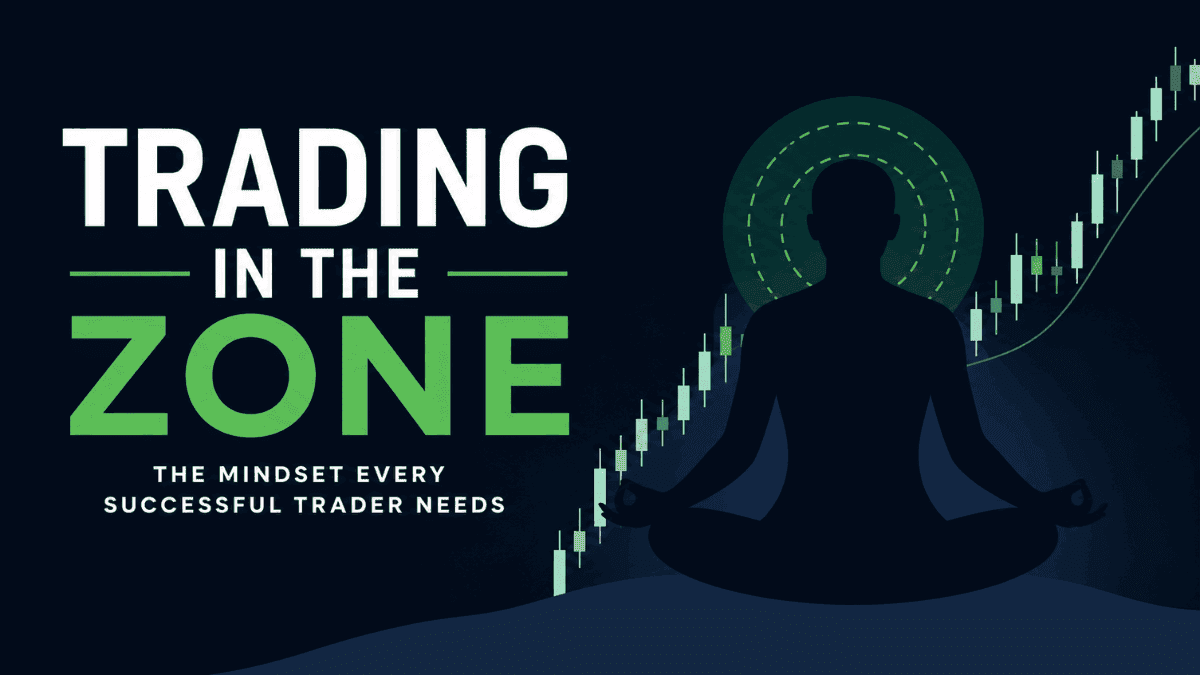
Most traders spend years searching for the perfect strategy, indicator, or trading system. Yet many eventually discover that the biggest obstacle to consistent profitability isn’t the market—it’s themselves. That’s the central message behind Trading in the Zone, a concept that has transformed how traders approach the financial markets.
Whether you trade forex, stocks, cryptocurrencies, commodities, or indices, understanding Trading in the Zone can help you overcome emotional decision-making, reduce trading mistakes, and develop the discipline needed for long-term success. While technical analysis and risk management are important, they become far more effective when supported by the right mindset.

This guide explores what Trading in the Zone means, why psychology matters in trading, and how you can develop the mental framework used by consistently successful traders.
What Is Trading in the Zone?
Trading in the Zone refers to a mental state where a trader executes their strategy with confidence, discipline, and emotional neutrality. The phrase became widely known through the influential book Trading in the Zone by Mark Douglas, one of the most respected trading psychology experts.
When traders operate “in the zone,” they are not driven by fear, greed, hope, or frustration. Instead, they trust their edge, follow their trading plan, and accept uncertainty as a natural part of the market.
This state doesn’t mean every trade becomes profitable. Rather, it means making consistently good decisions regardless of individual outcomes.
A trader in the zone understands that losses are part of the business. They focus on executing their process correctly rather than obsessing over the result of any single trade.
Why Trading Psychology Matters More Than Most Traders Realize
Many beginners assume trading success depends mainly on finding profitable entry and exit signals. While strategy matters, psychology often determines whether that strategy is implemented correctly.
Imagine two traders using the same trading system. One follows the rules precisely. The other moves stop losses, close trades prematurely, and take impulsive entries.
Over time, the disciplined trader is likely to outperform despite using the same strategy.
The difference lies in mindset.
The Emotional Challenges of Trading
Financial markets constantly test emotions. Prices move unpredictably, profits fluctuate, and losses are unavoidable.
Common emotional reactions include:
- Fear of losing money
- Greed during winning streaks
- Anxiety before entering trades
- Frustration after losses
- Overconfidence after large wins
- Revenge trading following mistakes
These emotions can lead traders to abandon otherwise sound trading plans.
Why Technical Skills Alone Are Not Enough
A trader may understand chart patterns, support and resistance, market structure, and risk management. Yet emotional decision-making can undermine all of that knowledge.
Many traders know exactly what they should do. The challenge is consistently doing it under pressure.
That’s where Trading in the Zone becomes valuable.
The Core Principles of Trading in the Zone
Understanding the key principles behind Trading in the Zone can fundamentally change how you view the markets.
Accepting Uncertainty
One of the most important lessons is accepting that no trade outcome is guaranteed.
Many traders subconsciously seek certainty. They want confirmation that a trade will work before risking money.
Markets don’t provide certainty.
Even the strongest trading setup can fail. Professional traders understand this reality and embrace it rather than resist it.
When you accept uncertainty, losing trades become less emotionally painful because they are expected as part of the process.
Thinking in Probabilities
Successful traders don’t think like gamblers. They think like casino owners.
A casino knows some customers will win. Yet the casino remains profitable because it has a statistical edge over thousands of outcomes.
Trading works similarly.
A profitable strategy doesn’t need to win every trade. It only needs a positive expectancy over a large sample size.
When traders begin thinking probabilistically, they stop treating every trade as a life-or-death event.
Detaching From Individual Outcomes
Many trading mistakes occur because traders become emotionally attached to individual positions.
They desperately want a trade to succeed.
This emotional attachment often causes traders to:
- Hold losing positions too long
- Exit winners too early
- Ignore stop losses
- Increase position sizes recklessly
Trading in the Zone encourages focusing on long-term performance rather than individual trades.
Trusting Your Edge
An edge is a repeatable advantage that gives a trader a positive expectation over time.
Without trust in your edge, every trade feels uncertain and stressful.
Building trust requires testing your strategy, gathering data, and observing results across many trades.
When confidence comes from evidence rather than hope, decision-making becomes significantly easier.
Common Psychological Barriers That Prevent Traders From Reaching the Zone
Most traders struggle with similar mental obstacles.
Recognizing these barriers is the first step toward overcoming them.
Fear of Missing Out (FOMO)
Fear of Missing Out occurs when traders chase opportunities because they worry a market move will continue without them.
This often leads to poor entries and increased risk.
Instead of following a plan, traders react emotionally to price movement.
Revenge Trading
After a loss, some traders immediately attempt to recover their money.
They increase position sizes, ignore rules, and take low-quality setups.
Revenge trading rarely ends well because decisions are driven by emotion rather than analysis.
Overconfidence
Winning streaks can be just as dangerous as losing streaks.
A series of successful trades may convince traders they are invincible.
This often results in excessive risk-taking and eventual losses that erase previous gains.
Paralysis by Analysis
Some traders become trapped in endless research and market analysis.
They constantly seek more confirmation before taking action.
This habit creates hesitation and missed opportunities.
At some point, successful trading requires trusting a tested process.
How to Develop a Trading in the Zone Mindset
The good news is that trading psychology can be improved with deliberate practice.
Like any skill, mental discipline develops through repetition.
Create a Detailed Trading Plan
A trading plan removes uncertainty from decision-making.
Your plan should define:
- Entry criteria
- Exit rules
- Risk per trade
- Position sizing
- Market conditions to trade
- Market conditions to avoid
When rules are clearly defined, emotional decisions become less frequent.
Focus on Process Over Profit
Many traders evaluate success solely by daily profits and losses.
This creates emotional highs and lows that interfere with consistency.
A better approach is to measure success by execution quality.
Did you follow your rules?
Did you manage risk correctly?
Did you stick to your plan?
These questions matter more than the outcome of a single trade.
Use Consistent Risk Management
Confidence grows when risk is controlled.
Knowing that one trade cannot significantly damage your account reduces emotional pressure.
Many professional traders risk only a small percentage of their capital on each trade.
This allows them to survive inevitable losing streaks.
Keep a Trading Journal
A trading journal helps identify emotional patterns.
Record:
- Entry reasons
- Exit reasons
- Emotions before and after trades
- Mistakes made
- Lessons learned
Over time, recurring psychological weaknesses become easier to spot and correct.
Embrace Losing Trades
One of the most powerful mindset shifts is viewing losses as business expenses.
Every professional trader experiences losing trades.
The goal is not to eliminate losses. The goal is managing them effectively while allowing profitable trades to outweigh them over time.
Signs You Are Trading in the Zone
How do you know when you’re approaching this mindset?
Several indicators often appear.
Emotional Stability
Winning and losing trades no longer create extreme emotional reactions.
You remain relatively calm regardless of short-term outcomes.
Consistent Execution
You follow your rules consistently without second-guessing every decision.
Confidence comes from your process rather than market predictions.
Reduced Stress
Trading feels less exhausting.
You spend less time worrying about individual positions and more time focusing on overall performance.
Improved Discipline
Impulsive trades become less common.
You wait patiently for setups that align with your strategy.
Practical Example of Trading in the Zone
Imagine a trader whose strategy has historically won 45% of trades while maintaining a favorable risk-to-reward ratio.
A losing trade occurs.
Instead of becoming frustrated, the trader recognizes that losses are part of the statistical model.
They review the trade, confirm the rules were followed, and move on to the next opportunity.
Another trader using the same strategy reacts emotionally.
They double their position size on the next trade to recover losses.
This emotional response introduces unnecessary risk and often leads to further mistakes.
The difference isn’t the strategy.
The difference is in mindset.
The Lasting Impact of Trading in the Zone
The greatest benefit of Trading in the Zone is not necessarily higher profits in the short term. Its true value lies in creating consistency.
Markets will always be uncertain. Winning streaks and losing streaks will continue to occur. What changes is how you respond to them.
Traders who develop a zone mindset stop chasing certainty and start focusing on probabilities. They accept risk, trust their edge, and execute their plans with discipline.
Over time, this psychological stability becomes one of the most powerful competitive advantages a trader can possess.
Final Thoughts
Trading in the Zone is ultimately about mastering yourself before attempting to master the market. Technical analysis, indicators, and trading systems all have their place, but they are only tools. The mindset behind those tools often determines whether they produce consistent results.
By accepting uncertainty, thinking in probabilities, controlling emotions, and focusing on disciplined execution, you can move closer to the mental state that many successful traders share. It won’t happen overnight, but every step toward psychological consistency brings you closer to becoming a more confident, disciplined, and profitable trader.
Trade Anytime, Anywhere with XM
Take your trading to the next level with a globally trusted forex and CFD broker. Enjoy competitive spreads, fast execution, and reliable customer support while trading securely.
With XM, you get access to powerful trading platforms, real-time charts, flexible account types, and advanced tools to help you analyze the markets and manage your trades efficiently. Start your journey today by opening a trading account for free and join millions of traders worldwide.
✅ Open an Account with XM
Vincent Nyagaka has been trading and analyzing markets for over 10+ years. He is a respected trader, author, and coach in financial markets, and is known as the authority on price action trading. At Eazypips, he shares practical strategies and trading lessons to guide aspiring traders toward consistent results.