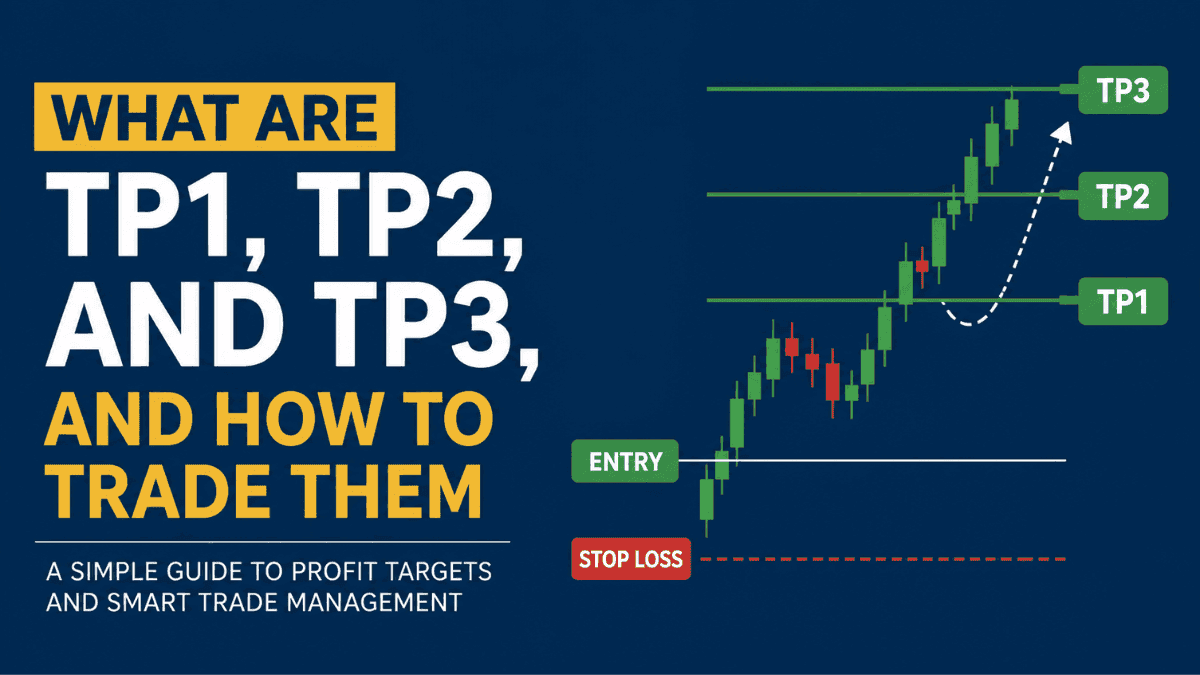
Understanding what TP1, TP2, and TP3 are and how to trade them can completely change how you manage profits in the forex market. Instead of closing trades too early or holding too long, these structured take-profit levels give you a clear exit strategy.
If you’ve ever watched a profitable trade reverse before you closed it, you already know why this matters. TP1, TP2, and TP3 are not just labels — they’re part of a disciplined approach to locking in gains while still giving your trade room to grow.

What Are TP1, TP2, and TP3?
At their core, TP1, TP2, and TP3 represent predefined price levels where you take profits in stages. Rather than exiting a trade all at once, you gradually secure profits as the market moves in your favor.
Breaking Down the Concept
When you enter a trade, you typically define:
- Entry price – where you open the trade
- Stop loss (SL) – where you exit if the trade goes wrong
- Take profit levels (TP1, TP2, TP3) – where you exit with profit
Here’s how each level works:
- TP1 (Take Profit 1): The first target where you secure partial profit
- TP2 (Take Profit 2): A higher target where you lock in more gains
- TP3 (Take Profit 3): The final target, usually the most ambitious
This approach is often called scaling out, and it helps balance risk and reward in a structured way.
Why Professional Traders Use Multiple Take Profits
There’s a reason experienced traders rarely rely on a single exit point. Markets are unpredictable, and no one can guarantee price will reach a final target.
The Real Advantage of Scaling Out
Using TP1, TP2, and TP3 gives you flexibility and control. It allows you to:
- Lock in profits early without closing the entire trade
- Reduce emotional decision-making during volatility
- Stay in trending markets longer
- Protect capital by adjusting risk after TP1 is hit
Imagine a trade moves halfway to your final target, then reverses sharply. If you’ve already taken profits at TP1, you still walk away with gains instead of frustration.
How TP1, TP2, and TP3 Work in Real Trading
To truly understand this strategy, it helps to see it in action. Let’s walk through a practical forex example.
Example Trade Setup
Suppose you enter a buy trade on EUR/USD at 1.1000 with a stop loss at 1.0950.
You might define your targets like this:
- TP1: 1.1050
- TP2: 1.1100
- TP3: 1.1150
Position Management
Instead of closing your entire trade at one level, you split your position:
- Close 50% at TP1
- Close 30% at TP2
- Let 20% run to TP3
This way, even if the price reverses after TP2, you’ve already secured a solid portion of profit.
How to Set TP1, TP2, and TP3 Levels
Setting random targets defeats the purpose of this strategy. Your take-profit levels should be based on technical analysis and market structure.
Key Methods for Setting Targets
1. Support and Resistance Levels
These are price zones where the market has historically reacted. They’re among the most reliable areas for placing TP levels.
2. Risk-to-Reward Ratio
A common approach is aiming for:
- TP1: 1:1 risk-to-reward
- TP2: 1:2
- TP3: 1:3 or higher
This ensures your winning trades outweigh your losses over time.
3. Fibonacci Levels
Fibonacci retracements and extensions can help identify natural price targets, especially in trending markets.
4. Trend Structure
In an uptrend, targets can align with higher highs. In a downtrend, they follow lower lows.
How to Trade Using TP1, TP2, and TP3
Knowing the theory is one thing — applying it consistently is what separates profitable traders from struggling ones.
Step-by-Step Strategy
Step 1: Identify a Valid Trade Setup
Look for clear entry signals using your strategy (price action, indicators, or patterns).
Step 2: Define Stop Loss First
Always determine where your trade is invalid before thinking about profits.
Step 3: Set Your TP Levels
Use technical analysis to define realistic TP1, TP2, and TP3 levels.
Step 4: Split Your Position
Divide your trade into portions so you can exit gradually.
Step 5: Adjust Risk After TP1
Once TP1 is hit, many traders move their stop loss to break-even. This removes risk from the trade.
Common Mistakes Traders Make
Even though the concept is simple, execution often goes wrong. Avoid these common pitfalls.
Mistakes to Watch Out For
- Setting unrealistic TP levels that the price rarely reaches
- Closing everything at TP1 defeats the purpose of scaling out
- Ignoring market conditions, such as low volatility
- Moving stop loss too early, getting stopped out unnecessarily
- Trading without a plan, relying on emotions instead of strategy
Consistency comes from discipline, not guessing.
Risk Management and Position Sizing
This is where TP1, TP2, and TP3 become truly powerful. They integrate directly into a solid risk management framework.
Why It Matters
Even the best strategy fails without proper risk control. By scaling out:
- You reduce exposure as the trade progresses
- You protect profits during market reversals
- You improve long-term consistency
A good rule is to risk only a small percentage of your account per trade — typically 1–2%.
When to Use TP1, TP2, and TP3 (and When Not To)
This strategy isn’t ideal for every market condition. Knowing when to apply it can make a big difference.
Best Situations
- Trending markets with strong momentum
- Swing trading setups
- Breakout trades
- High volatility sessions
Less Effective Situations
- Choppy or sideways markets
- Very short-term scalping trades
- Low liquidity conditions
In ranging markets, the price may hit TP1 but struggle to reach TP2 or TP3.
Final Thoughts
Mastering what TP1, TP2, and TP3 are, and how to trade them, is less about memorizing levels and more about building a disciplined mindset. It shifts your focus from “guessing the top” to managing trades professionally.
You don’t need to be right all the time to be profitable. By locking in profits step by step, you create a system that works even when the market doesn’t go exactly as planned.
If you apply this approach consistently — with proper analysis, risk management, and patience — you’ll notice a major improvement in how you trade and how you handle profits.
Frequently Asked Questions About TP1, TP2, and TP3
1. What are TP1, TP2, and TP3 in trading?
TP1, TP2, and TP3 are predefined take-profit levels where traders close parts of their position to lock in profits. TP1 is the first target, TP2 the second, and TP3 the final target. This method helps traders secure gains while still allowing the trade to run further.
2. Why should I use multiple take-profit levels instead of one?
Using multiple take-profit levels reduces risk and improves consistency. Instead of relying on one final target, you secure profits gradually. This protects you from sudden market reversals and removes emotional pressure during trades.
3. How do I set TP1, TP2, and TP3 correctly?
You should base your TP levels on technical analysis, not guesswork. Common methods include using support and resistance levels, Fibonacci extensions, or risk-to-reward ratios like 1:1 for TP1, 1:2 for TP2, and 1:3 for TP3.
4. Can beginners use TP1, TP2, and TP3 effectively?
Yes, beginners can benefit greatly from this strategy. It provides structure and discipline, helping new traders avoid common mistakes like closing trades too early or holding onto them for too long without a plan.
5. Should I move my stop loss after TP1 is hit?
Many traders move their stop loss to break-even after TP1 is reached. This removes risk from the trade and ensures you won’t lose money if the market reverses, while still allowing you to aim for TP2 and TP3.
6. Do TP1, TP2, and TP3 work in all market conditions?
They work best in trending or high-momentum markets where price is more likely to reach multiple targets. In sideways or low-volatility markets, the price may hit TP1 but struggle to reach TP2 or TP3, so adjustments may be needed.
Trade Anytime, Anywhere with XM
Take your trading to the next level with a globally trusted forex and CFD broker. Enjoy competitive spreads, fast execution, and reliable customer support while trading securely.
With XM, you get access to powerful trading platforms, real-time charts, flexible account types, and advanced tools to help you analyze the markets and manage your trades efficiently. Start your journey today by opening a trading account for free and join millions of traders worldwide.
✅ Open an Account with XM
Vincent Nyagaka has been trading and analyzing markets for over 10+ years. He is a respected trader, author, and coach in financial markets, and is known as the authority on price action trading. At Eazypips, he shares practical strategies and trading lessons to guide aspiring traders toward consistent results.