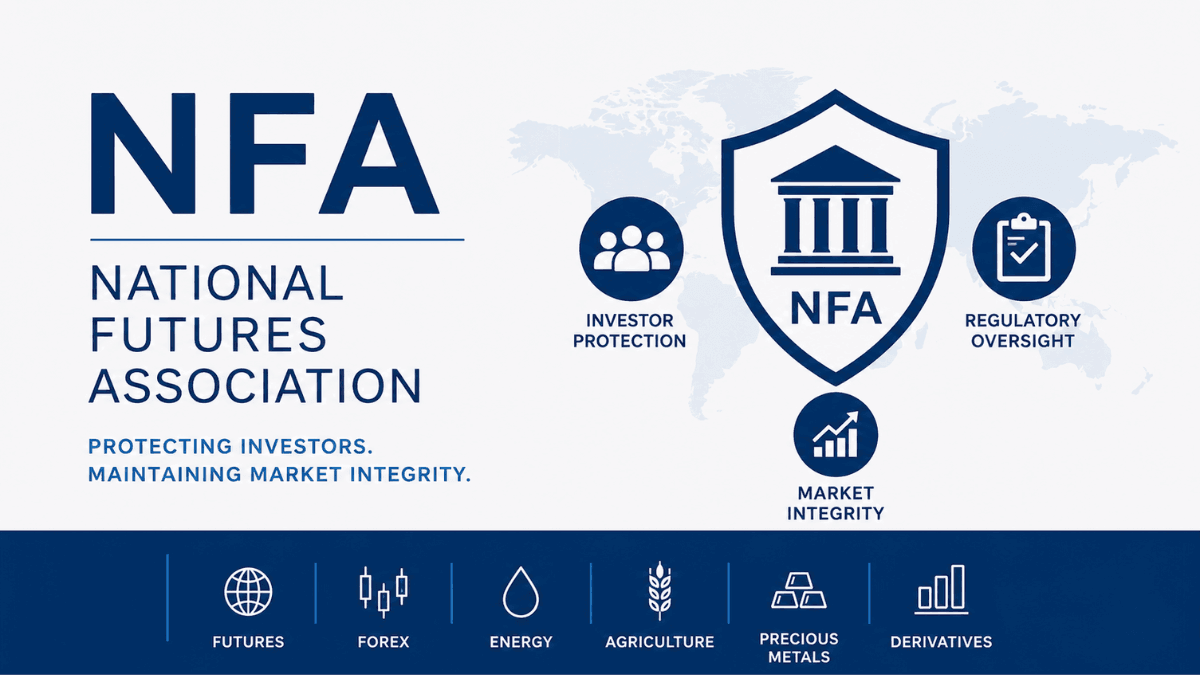
The National Futures Association (NFA) plays a crucial role in maintaining trust, transparency, and accountability within the U.S. derivatives industry. If you trade forex, futures, commodities, or other derivatives through a U.S.-regulated broker, chances are that the broker is overseen by the NFA.
For traders, understanding how the NFA works is more than just learning about another financial regulator. It helps you evaluate broker credibility, understand investor protections, and make safer decisions when choosing where to trade. Whether you are a beginner exploring the markets or an experienced trader comparing brokers, knowing how the NFA operates can help you avoid unnecessary risks.
Click Here To Join our Telegram Community
What Is the National Futures Association (NFA)?
The National Futures Association is the self-regulatory organization responsible for overseeing the U.S. derivatives industry. Established in 1982, the NFA works to protect market participants by enforcing rules, monitoring member firms, and promoting ethical business practices.
Unlike government agencies that are funded directly by taxpayers, the NFA is a self-regulatory organization (SRO). This means it is funded primarily by membership dues and fees paid by firms participating in the futures and derivatives markets.
The organization operates under the oversight of the U.S. Commodity Futures Trading Commission (CFTC), which is the federal agency responsible for regulating commodity futures and derivatives markets.
Its primary mission is straightforward: protect investors and maintain the integrity of U.S. derivatives markets.
Why Was the NFA Created?
The creation of the NFA addressed a growing need for stronger oversight in the derivatives industry.
Before the NFA existed, the futures market expanded rapidly, bringing increased participation from both institutional and retail investors. As trading activity grew, regulators recognized the need for a dedicated organization that could monitor market participants more closely and enforce industry standards.
The NFA was established to:
- Protect investors from fraud and abusive practices
- Promote fair and transparent markets
- Enforce compliance among industry participants
- Enhance confidence in U.S. derivatives markets
- Support market stability and integrity
Today, the NFA remains one of the most respected self-regulatory organizations in the financial industry.
How the NFA Fits Into the U.S. Regulatory Framework
Understanding where the NFA fits within the broader regulatory structure helps clarify its responsibilities.
The U.S. derivatives market is regulated through a combination of government oversight and self-regulation.
The Role of the CFTC
The Commodity Futures Trading Commission is the federal regulator responsible for overseeing futures, options, and swaps markets.
The CFTC establishes regulatory policies, enforces federal laws, and supervises the overall derivatives industry.
The Role of the NFA
The NFA acts as the industry’s frontline regulator. It develops compliance rules, conducts audits, monitors member firms, investigates misconduct, and educates investors.
While the CFTC provides regulatory authority, the NFA handles much of the day-to-day oversight of registered firms and professionals.
This relationship creates multiple layers of protection for market participants.
What Markets Does the NFA Regulate?
The NFA focuses primarily on derivatives-related activities.
These include futures contracts, commodity options, retail forex transactions, swaps, and certain commodity investment activities.
Common markets under NFA oversight include:
- Currency futures
- Agricultural futures
- Energy futures
- Precious metals futures
- Stock index futures
- Retail forex trading
- Commodity pool investments
- Swap transactions
Because retail forex falls under NFA oversight in the United States, forex brokers serving U.S. residents must comply with some of the strictest standards in the industry.
Who Must Register With the NFA?
The NFA requires many industry participants to become members and comply with its rules.
Registration helps ensure that firms meet financial, operational, and ethical standards before they can offer services to customers.
Futures Commission Merchants (FCMs)
FCMs accept customer orders and funds for futures and options transactions.
They are among the most heavily regulated entities because they directly handle client money.
Retail Foreign Exchange Dealers (RFEDs)
RFEDs offer forex trading services to retail clients in the United States.
These firms must meet significant capital requirements and maintain ongoing compliance with NFA regulations.
Introducing Brokers (IBs)
Introducing brokers solicit or accept customer orders but do not hold customer funds directly.
Instead, they work with larger clearing firms that execute and process trades.
Commodity Trading Advisors (CTAs)
CTAs provide advice regarding futures, forex, or commodity trading.
They may manage trading strategies or offer recommendations to clients.
Commodity Pool Operators (CPOs)
CPOs manage pooled investment funds that trade futures and other derivatives.
These funds function similarly to hedge funds but focus on commodity-related markets.
Key Responsibilities of the NFA
The NFA performs several important functions that help protect traders and investors.
Each responsibility contributes to maintaining confidence in the financial system.
Registration and Membership Oversight
The NFA reviews applications from firms and individuals seeking to participate in regulated markets.
Background checks, financial reviews, and compliance evaluations help ensure that only qualified participants enter the industry.
Compliance Monitoring
The organization continuously monitors member firms for compliance with regulatory requirements.
This includes reviewing financial records, operational procedures, advertising materials, and customer communications.
Audits and Examinations
Regular audits help identify weaknesses before they become serious problems.
The NFA conducts examinations to verify that firms maintain proper controls and follow regulatory standards.
Enforcement Actions
When firms violate NFA rules, the organization can take disciplinary action.
Possible penalties include:
- Monetary fines
- Suspensions
- Membership restrictions
- Permanent bans
- Restitution orders
These enforcement powers help deter misconduct throughout the industry.
Investor Education
The NFA provides educational resources that help investors understand risks, evaluate firms, and recognize warning signs of fraud.
Education remains one of the most effective tools for investor protection.
How the NFA Protects Forex Traders
For forex traders, NFA oversight offers several important safeguards.
The U.S. retail forex market operates under strict regulations designed to reduce conflicts of interest and protect client funds.
Capital Requirements
NFA-regulated forex brokers must maintain substantial capital reserves.
Higher capital requirements help ensure that brokers can withstand market volatility and meet financial obligations to clients.
Transparency Standards
Brokers must provide accurate information about trading conditions, fees, risks, and performance claims.
This reduces the likelihood of misleading advertising and deceptive marketing practices.
Risk Disclosure Requirements
Forex trading carries significant risk.
NFA rules require brokers to provide clear disclosures so traders understand the potential for gains and losses before opening accounts.
Compliance Monitoring
The NFA actively monitors retail forex firms to identify potential violations and ensure ongoing compliance with industry regulations.
This oversight creates a safer trading environment compared to many lightly regulated jurisdictions.
NFA Background Affiliation Status Information Center (BASIC)
One of the NFA’s most valuable tools for investors is the BASIC database.
BASIC stands for Background Affiliation Status Information Center. It allows the public to research registered firms and individuals before opening trading accounts.
Using BASIC, traders can verify:
- Registration status
- Membership information
- Regulatory history
- Disciplinary actions
- Employment history
- Firm affiliations
Checking a broker’s BASIC profile is one of the smartest due diligence steps a trader can take.
How to Verify an NFA-Regulated Broker
Verifying a broker’s regulatory status takes only a few minutes but can prevent costly mistakes.
Start by visiting the NFA’s BASIC database and searching for the company’s name or NFA identification number.
Review the broker’s:
- Registration status
- Current membership standing
- Regulatory history
- Disciplinary records
- Business activities
If a broker claims to be NFA-regulated but cannot be found in BASIC, that should raise immediate concerns.
Benefits of Choosing an NFA-Regulated Broker
Many traders specifically seek brokers regulated by the NFA because of the organization’s reputation for strict oversight.
Several advantages come with trading through an NFA-regulated firm.
Strong Regulatory Standards
NFA rules are among the most rigorous in the world.
This reduces the likelihood of unethical business practices.
Enhanced Transparency
Member firms must maintain detailed records and provide accurate disclosures.
This gives traders more information for making informed decisions.
Better Investor Protection
Strict compliance requirements help safeguard clients from fraud and financial misconduct.
Greater Market Confidence
When traders know that firms are subject to regular oversight, market confidence increases.
This benefits both individual investors and the broader financial system.
Limitations of NFA Regulation
While NFA regulation provides significant protections, it is not a guarantee against all risks.
Traders should also understand the limitations.
The NFA cannot eliminate market risk. Losing money due to poor trading decisions remains a possibility regardless of how well-regulated a broker may be.
Similarly, regulatory oversight does not guarantee profitability or protect traders from every operational issue that may arise.
Risk management, education, and careful broker selection remain essential.
Common Misconceptions About the NFA
Many traders misunderstand what NFA regulation actually means.
Clearing up these misconceptions can help set realistic expectations.
NFA Regulation Does Not Guarantee Profits
Some traders mistakenly assume regulated brokers offer better trading performance.
Regulation focuses on fairness and compliance, not profitability.
NFA Regulation Is Not Insurance
While oversight improves safety, it does not function as an insurance policy against trading losses.
Market risk always exists.
Not Every Broker Can Serve U.S. Clients
Because of strict NFA requirements, many international brokers choose not to accept U.S. customers.
This often surprises traders who compare broker availability across different countries.
The NFA’s Importance in Modern Financial Markets
As financial markets become increasingly interconnected, strong regulatory oversight becomes even more important.
The NFA helps maintain confidence in U.S. derivatives markets by enforcing standards that promote transparency, accountability, and investor protection.
Its work extends beyond compliance checks and disciplinary actions. The organization contributes to market stability, supports ethical business practices, and provides valuable resources for traders seeking trustworthy financial services.
Without organizations like the NFA, investor confidence would likely decline, making markets less efficient and more vulnerable to fraud.
Final Thoughts
The National Futures Association (NFA) is one of the most influential regulatory organizations in the global derivatives industry. Through registration oversight, compliance monitoring, enforcement actions, and investor education, it helps maintain fair and transparent markets for futures, forex, and commodity traders.
If you are evaluating a broker, checking its NFA membership status should be part of your due diligence process. While regulation cannot eliminate trading risk, working with an NFA-regulated broker provides an additional layer of protection and accountability that many traders value.
For anyone participating in U.S. futures or forex markets, understanding the role of the NFA is an important step toward becoming a more informed and confident investor.
Frequently Asked Questions
What does NFA stand for?
NFA stands for National Futures Association, the self-regulatory organization that oversees the U.S. derivatives industry.
Is the NFA a government agency?
No. The NFA is a self-regulatory organization that operates under the oversight of the Commodity Futures Trading Commission (CFTC).
Does the NFA regulate forex brokers?
Yes. Retail forex brokers serving U.S. clients must comply with NFA regulations and maintain NFA membership.
How can I check if a broker is NFA-regulated?
You can verify a broker’s registration and membership status through the NFA’s BASIC database.
What is the BASIC database?
The Background Affiliation Status Information Center (BASIC) is a public database that provides information about registered firms, professionals, and disciplinary histories.
Why is NFA regulation important?
NFA regulation promotes transparency, protects investors, enforces compliance, and helps maintain confidence in financial markets.
Can I lose money with an NFA-regulated broker?
Yes. Regulation helps protect against fraud and misconduct, but it does not eliminate market risk or guarantee profitable trading results.
Trade Anytime, Anywhere with XM
Take your trading to the next level with a globally trusted forex and CFD broker. Enjoy competitive spreads, fast execution, and reliable customer support while trading securely.
With XM, you get access to powerful trading platforms, real-time charts, flexible account types, and advanced tools to help you analyze the markets and manage your trades efficiently. Start your journey today by opening a trading account for free and join millions of traders worldwide.
✅ Open an Account with XM